

EPDM Jogging Track Design and Installation: What Buyers Need to Know
A community jogging path is usually a different purchase from a full athletics track. It is often narrower, it follows a landscape route, it has more curves and edge transitions, and it has to work with the site's drainage, planting, lighting and daily pedestrian traffic. For a buyer, the useful starting point is therefore not only the running distance. It is the complete path area, the intended use, the base condition, the surface thickness, the color plan and the material package.
An EPDM jogging track is procured as a material package rather than as a finished product, which means the buying decision covers colored EPDM granules for the wear layer, PU binder for the bound layers, and a Base Layer material where the selected structure includes one. The structure itself varies with the site, budget, existing substrate, climate and expected traffic. FieldsMaster's published references for this application describe a one-layer EPDM surface over a prepared and primed base at a minimum of 10 mm with 15 mm preferred; where a project moves closer to track-level use, the published running-track references add a 13 mm two-layer structure built from an 8 mm SBR Base Layer plus a 5 mm EPDM Top Layer. Those are reference structures for the material conversation, not a substitute for project-specific design review.
For a trail-focused starting point, review the recreational trail surfacing solutions page before the material brief is written. Once the path area and target thickness are known, the EPDM material calculator gives an initial granule and binder estimate.
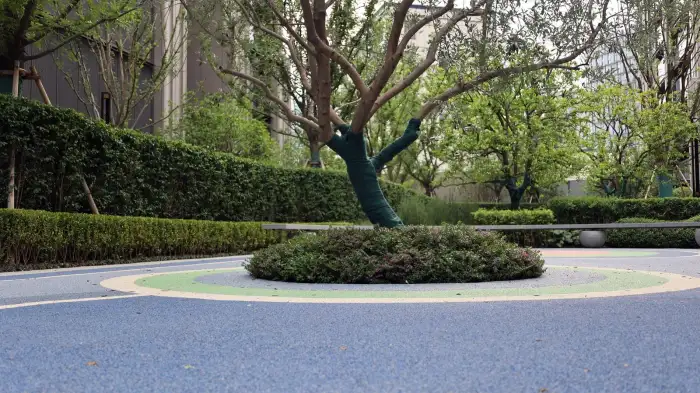
A community jogging route is measured as a surfacing area, not as a distance. The planting, paving, lighting and access points along it decide where the path widens, where it needs an edge detail and where the material estimate stops being a straight-line calculation.
The structure and thickness references published for this type of path are set out on the recreational trail surfacing solutions page.
Quick answer: A park or community jogging track can use an EPDM granule surface bound with PU binder over a prepared base. For an initial material discussion, the reference published for this application is a one-layer EPDM surface at a minimum of 10 mm with 15 mm preferred, with the final thickness confirmed from the path use, base condition, drainage, local requirements and installation method. Where a route moves closer to track-level use, the published running-track references are a 10 mm one-layer surface and a 13 mm two-layer structure. A 1.2-2.0 m wide path consumes less material than a multi-lane athletics track, but its curves, edges, access points and drainage details need the same attention. If the area and target thickness are available, start with the EPDM material calculator for a first granule and PU binder estimate.
Key Takeaways
- The path area, not the route length, drives the order. A 300 m route is a starting reference; the order is based on surfacing area after bends, widened rest points, ramps and connections are measured.
- Two materials are purchased, plus one conditional. EPDM granules for the wear layer and PU binder for the bound layers, with Base Layer material only where a two-layer reference structure is priced.
- Reference thickness is a conversation opener, not a specification. The reference published for community walking and jogging paths is a one-layer EPDM surface at a minimum of 10 mm with 15 mm preferred; higher-use routes are checked against the published running-track structures.
- Color is a material specification. Whether a path is one solid color or a blended palette, the approved reference should be recorded before the quotation, not resolved on site.
- Edges and drainage belong in the material list. Kerbs, transitions, designed falls and interruptions along the route are commonly left out of first estimates.
1. EPDM Jogging Track vs Rubber Pavement: Comfort, Scope and Cost Review
The term "rubber pavement" can describe several materials and systems, including EPDM granule surfaces, SBR-based surfaces, rubber tiles and prefabricated rubber products. When a buyer compares options, it helps to ask what is visible on the finished path, what sits below it, and how a damaged section could be repaired later.
An EPDM rubber jogging track normally uses colored EPDM granules in the exposed layer. That gives the path a granular finish and allows the color plan to follow a park, residential-community or wellness-route design. Other rubber-pavement options may suit particular budgets or sites, but they are not necessarily comparable on color range, joint layout, base preparation or repair method.
| Review point | EPDM granule jogging surface | Other rubber-pavement options |
|---|---|---|
| Visible finish | Granular, color-customizable surface | Varies by tile, roll or poured material |
| Material planning | EPDM granules, PU binder and base preparation reviewed together | Depends on the selected product and installation method |
| Route flexibility | Can follow curves and irregular community-path layouts | Some prefabricated formats may create more joints or cutting work on curves |
| Repair planning | Keep approved color and particle-size references for future patching | Depends on product availability and matching format |
| Cost comparison | Compare full material scope, base work, edges, drainage and labor | Do not compare only the visible surface unit price |
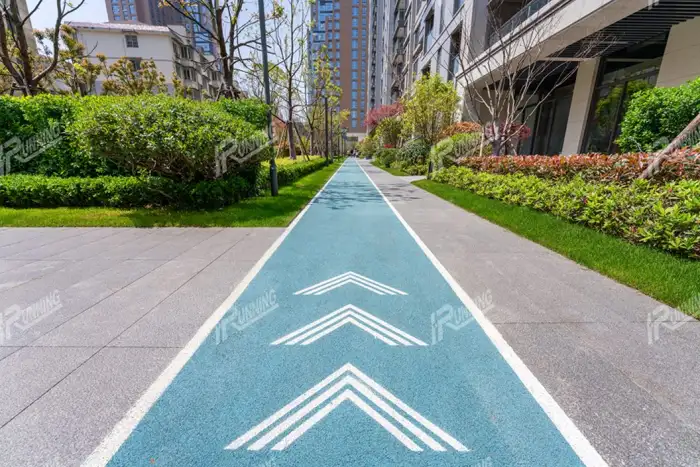
A procurement comparison is only useful when all options are quoted against the same drawing, path area, base assumptions, drainage scope and edge details. Otherwise a low surface-material figure is compared with a more complete installed-material package.
Use the recreational trail surfacing guide to frame the surface system, and the residential landscape solutions page when the path sits inside a planted community area.
2. Jogging Track Thickness and Width for Parks and Communities
Community paths and formal athletics tracks serve different layouts and traffic patterns. A jogging path may run through a park, around residential landscaping or beside a fitness zone, and it is often 1.2-2.0 m wide, whereas a standard athletics track includes multiple lanes, fixed geometry and specialist event areas.
The table below is a planning comparison, not a construction specification. Final structure, thickness and material consumption should be confirmed against the path drawing, the existing base, drainage, local requirements and the installer's method.
| Project type | Typical layout focus | Reference surface approach | Material-planning focus |
|---|---|---|---|
| Community jogging path | 1.2-2.0 m wide landscape route, curves and access points | One-layer or two-layer EPDM system can be evaluated | Path area, curves, edges, drainage and color zoning |
| School running route | Regular use, PE activities and campus circulation | Structure selected around expected use and base condition | Surface continuity, line-marking needs and repair allowance |
| Athletics track | Lanes, curves, D-zones and field-event areas | System selected to the project performance brief | Detailed zone schedule, system build-up and testing plan |
For a community walking and jogging path, the reference published for this application is a one-layer EPDM surface over a prepared and primed base, at a minimum of 10 mm with 15 mm preferred, with the thickness and binder choice confirmed against the base, the drainage and the outdoor conditions. The recreational trail surfacing solutions page sets out that reference in full.
Where a route moves closer to track-level use and a two-layer system is being considered, the published running-track references describe a 10 mm one-layer surface and a 13 mm two-layer surface built from an 8 mm SBR Base Layer plus a 5 mm EPDM Top Layer. That wider systems view belongs to the track cluster and is covered in the running track surfacing guide for project owners. Showing the contractor which reference is being priced usually settles whether a material estimate is on the same basis.
2.1 Why width changes the quantity discussion
A 300 m community route does not have one universal material quantity. Its surface area depends on the actual path width and on the geometry of bends, widened rest areas, ramps and connections. As plan-area illustrations:
- A 300 m route at 1.2 m nominal width is about 360 m² before widened curves, joins or site-specific adjustments.
- A 300 m route at 1.5 m nominal width is about 450 m² before those adjustments.
- A 300 m route at 2.0 m nominal width is about 600 m² before those adjustments.
These figures describe plan area only, and they are not an order quantity. The actual EPDM granule, PU binder and Base Layer quantities depend on the selected structure, thickness, granule grade, binder ratio, edge treatment, installation loss and the approved drawing measurements.

The measured area, not the nominal length, is what the granule and binder quantities are calculated from. Bends, widened resting points and connection stubs are part of the purchase.
Bring the route drawing and the selected structure to the EPDM material calculator for a first-pass granule, SBR and PU binder estimate.
3. Color Options and Route Marking for a Jogging Track
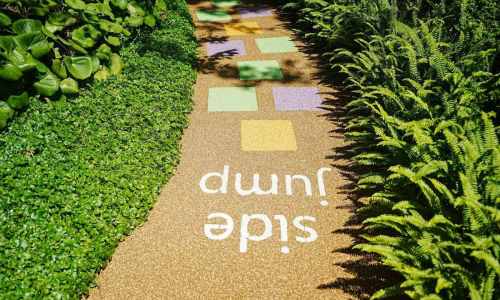
Color can help a jogging route fit its surroundings and guide users through a community space. A park may use a natural green or earth-toned path; a residential wellness route may use a branded color family; a mixed-use path may use a clearer edge or a directional strip. The material brief should identify each color zone before the quotation is finalized.
FieldsMaster's published color resources state that buyers can review 114+ standard EPDM colors and prepare RAL or Pantone requirements for project-specific color matching. The choice still needs a physical sample or an agreed color reference before it is locked in, particularly when the project includes later phases or repair material. The published range is on the EPDM granule color card, and a proposed palette can be compared in the Color Mix Tool before a sample is requested.
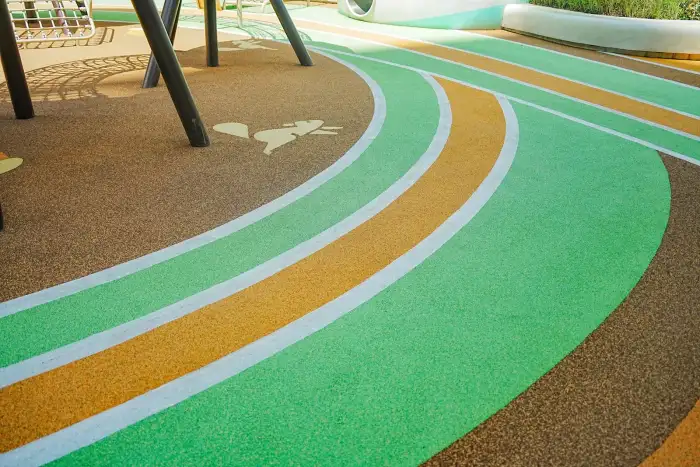
Natural green, ochre, brown and neutral combinations connect the route with planting, paving and wayfinding, while contrasting blends clarify activity zones or route edges.
Either way, the record that matters later is the approved color reference and the particle-size range that goes with it.
4. Factory-Premixed EPDM Color Blends for Recreational Trails
Many community jogging paths and recreational trails now use blended EPDM colors rather than a single solid color, and the blend should be treated as a material specification rather than as an on-site task for the paving crew.
FieldsMaster factory-premixes the approved blend before shipment, so the installer receives ready-to-lay material: the on-site color-mixing step is taken out of the installation sequence, and no mixing equipment or dedicated color-blending labor is needed on site. Because the ratio is controlled in production, the approved blend also carries forward as a repeatable reference for later phases and repair orders.
For an EPDM jogging track, record the following together:
- Main path color and the approved color-card reference.
- Any contrast strip, center guide or distance-marker color.
- Particle-size range for the proposed EPDM Top Layer.
- PU binder type and the proposed mix ratio.
- Whether the color applies to the full route or only to selected zones.
- For a blended path, the approved premixed formula and its sample reference.
- The quantity of spare EPDM granules intended for future repairs.
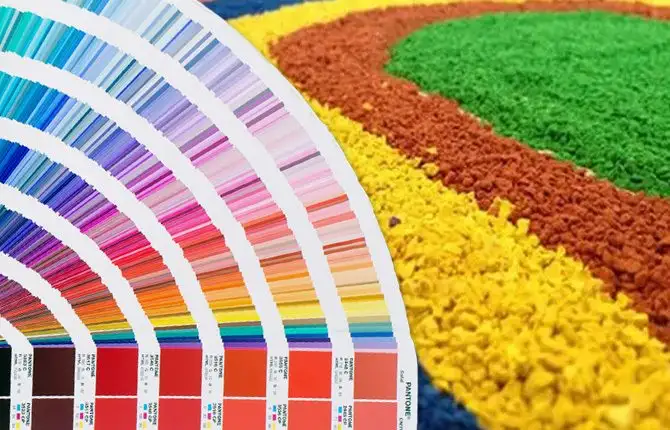
A blend is approved against the color card and a physical sample, then held in production as a fixed ratio.
The Color Mix Tool compares a proposed blend digitally; the free sample request is what confirms it in hand.
5. Drainage and Edge Detail for Outdoor Jogging Tracks
Drainage and edges are easy to overlook because they are not the visible center of the path. Yet they decide whether water leaves the surface, whether the path meets the landscaping neatly, and whether the material estimate covers the real finishing work.
Rather than applying one drainage slope to every site, confirm the local civil drawing, the base fall, the drainage outlets, the surrounding soil conditions and the requirements that apply. The trail installation-risk guidance advises the same checks before primer or Base Layer work: the foundation condition, water management, the site conditions and EPDM and PU binder compatibility.
A buyer's path-detail checklist can include:
- Existing base condition and any repair or levelling work it needs.
- Intended falls and the connection to the site drainage designed for the project.
- Edge restraint, kerb or transition detail where the EPDM surfacing meets grass, paving or a road edge.
- Tree pits, inspection covers, lighting bases, ramps and other interruptions along the route.
- Protection of the surface during curing and during follow-on landscaping work.
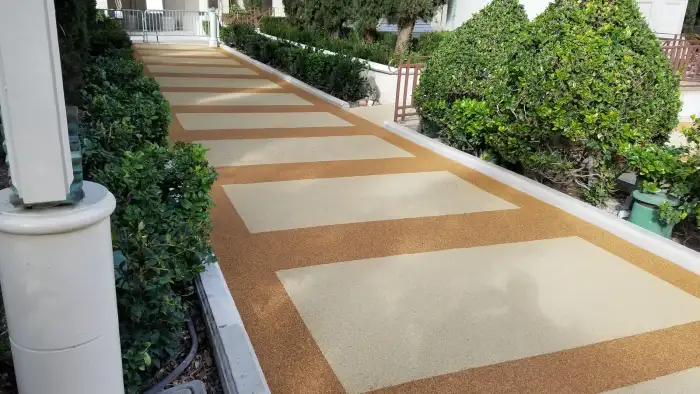
Where a path meets planting, paving or a road edge, the transition is part of the surfacing scope rather than a landscaping afterthought.
The FM-R granule range for recreational trails sets out the grades supplied for pathway and park work.
6. Installation Steps for an EPDM Granule Jogging Track
The installation sequence depends on whether a one-layer or two-layer structure is selected, and on the prepared base at the site. A procurement brief can still describe the main control points so that material, timing and responsibilities line up.
- Review the route and base. Confirm the path dimensions, levels, drainage, moisture condition, cleanliness and repair scope before surface materials are delivered.
- Confirm the material package. Align EPDM granules, PU binder, primer, the selected Base Layer material where applicable, color references, particle-size range and batch quantities.
- Prepare and prime the base. Use the primer and base-treatment method that suits the approved system and the actual substrate.
- Install the selected surface structure. A one-layer reference system uses EPDM granules and PU binder over a prepared, primed base; a two-layer reference system uses an SBR Base Layer followed by an EPDM Top Layer.
- Finish details and marking. Complete the planned color zones, route guidance or markings, edges and transitions without mixing unapproved colors or particle sizes.
- Protect curing and inspect the completed route. Review surface continuity, edge condition, drainage behavior and color-zone alignment before the path is opened to daily use.
Weather, temperature, humidity, rainfall and curing conditions can all affect installation. FieldsMaster's trail guidance recommends reviewing those conditions, together with the foundation, water management and binder compatibility, before installation begins. The binder and primer side of the package is set out on the PU binder page.

Granule and binder are laid as one operation, which is why the binder ratio, the batch plan and the weather window are procurement questions and not only site questions.
Material-side preparation is described on the EPDM granules range.
7. A 300 m Community Jogging Track: Material-List Example
The example below is a request checklist, not a final bill of quantities. It helps a buyer turn an initial "300 m jogging track" inquiry into a material discussion that can be priced and checked.
| Item | Example request input | Why it is needed |
|---|---|---|
| Route length | 300 m | Starting reference only; the order is based on surface area |
| Nominal width | 1.2 m / 1.5 m / 2.0 m | Establishes the preliminary plan area |
| Path drawing | Curves, widened areas, ramps and joins | Converts nominal length into measurable surfacing area |
| Surface structure | One-layer trail reference (minimum 10 mm, 15 mm preferred) or a two-layer track reference | Determines whether SBR Base Layer material is included |
| EPDM Top Layer | Approved color and particle-size range | Defines the visible surface-material requirement |
| PU binder | Compatible binder type and ratio | Connects the granules with the proposed system |
| Edge and drainage detail | Kerbs, transition points and designed falls | Identifies scope commonly missed from first estimates |
| Allowance | Installation loss and agreed spare material | Supports site adjustment and future repair planning |
| Delivery plan | Bag, pallet, phase and site-access requirements | Aligns supply with the installation sequence |
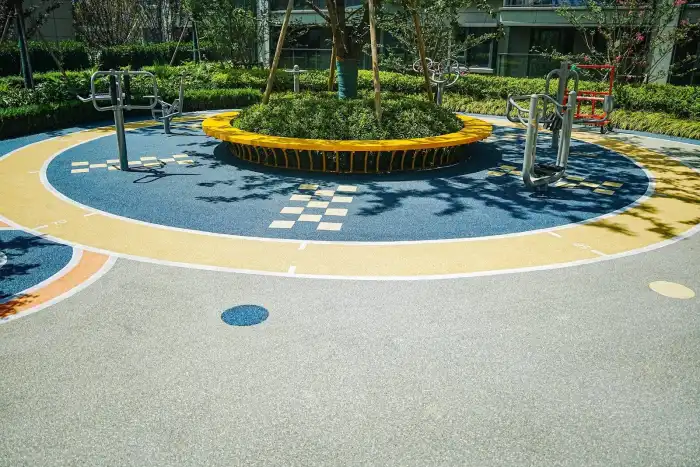
A community route that also carries fitness equipment, seating or lighting has more interruptions in the surfacing than an open path, and each one is measured.
Start from the EPDM material calculator, then submit the drawing and the selected system for a project-specific material review.
8. Why FieldsMaster for EPDM Granules on Jogging Tracks
A jogging-path order is easier to control when the material details are kept together instead of being sourced as disconnected items. FieldsMaster's published resources let a buyer review granule size, color, batch planning and Top Layer application alongside PU binder options, Base Layer choices and the inputs to a material calculation.
The recreational trail range is supplied as the FM-R series, which is published for pathways, parks and leisure routes. The published solution page lists reference particle-size ranges from 0.5-2.0 mm to 2-4 mm for the right layer and system, together with the one-layer and two-layer surface references. Those published ranges are a way to start a focused technical conversation; the final selection stays tied to the approved structure and the project requirement.
For a community jogging project, FieldsMaster can support the material side of the discussion through:
- EPDM granules and PU binder planned around the proposed surface structure.
- Color-card, RAL or Pantone reference discussion, physical samples and factory-premixed blend approval.
- An initial quantity estimate using path area, thickness and the selected system as inputs.
- Material planning that separates the Top Layer, the Base Layer where it is used, and project allowances.
- A documented reference for granule size, color and material pairing that supports later repeat supply or repairs.
FieldsMaster supplies EPDM granules and PU binder materials. Final civil design, drainage design, local compliance review and installation execution remain with the relevant project professionals and the contractor.
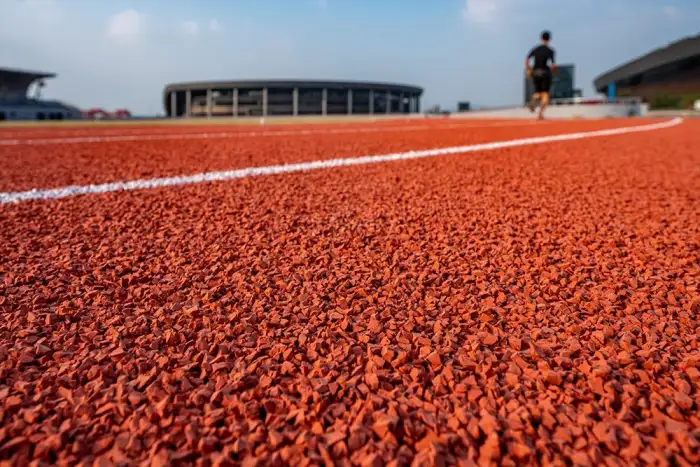
The granule grade, the color reference and the binder ratio are recorded together, which is what makes a second order or a repair match the first one.
The trail grades are listed on the FM-R series for recreational trails page.
9. FAQ
How thick is an EPDM jogging track?
Thickness depends on the selected structure, the base condition, the path use, drainage and the project requirements. For a community walking and jogging path, the reference published for this application is a one-layer EPDM surface at a minimum of 10 mm, with 15 mm preferred, confirmed against the base, the drainage and the outdoor conditions. Where a route moves closer to track-level use, the published running-track references are a 10 mm one-layer surface and a 13 mm two-layer surface with an 8 mm SBR Base Layer plus a 5 mm EPDM Top Layer. Confirm the final thickness with the project design and the installer.
Can EPDM granules be used for walking and jogging paths?
EPDM granules can be used in walking and jogging-path surfacing systems when they are paired with a suitable PU binder, a prepared base and a project-appropriate installation method. Confirm the full system against the intended use, the climate, the base condition and the local requirements.
How do you install an EPDM jogging track surface?
A typical sequence includes base inspection and preparation, primer where required, material confirmation, installation of the selected one-layer or two-layer system, edge and marking work, curing protection and final inspection. The specific process should follow the approved system and the site conditions.
Before you compare jogging-path quotations, check what is missing from each. A 300 m route is not an order quantity, and the shortfall on these projects is almost never the granule price. It is the same five lines left out of the shorter quotation:
- Measured surfacing area — bends, widened rest points, ramps and connections are what turn a nominal length into an orderable area.
- PU binder — stated per layer against the agreed ratio, rather than carried as a rounded allowance.
- Base Layer material — included only where the two-layer reference structure is the one being priced.
- Installation loss — a figure for this project rather than an assumed percentage, because it moves with the substrate, the thickness, the weather and the installer.
- Approved color reference and spare granules — the only way to patch a section later without a visible color difference.
Each of these is normally noticed on site rather than in the quotation, at the point where a reorder can no longer arrive in time.
Want the material list checked before you confirm the order? Send FieldsMaster the route drawing or site dimensions, the nominal width, the intended use, the base type and the color reference through the project quotation page, and the material list comes back with granules, PU binder, Base Layer material, installation loss and spare granules accounted for within 48 hours.