

What is EPDM Rubber Granule Hardness and Why It's Crucial for Performance
As a seasoned professional in the surfacing industry, I often get asked about the secret behind truly durable and comfortable sport or play surfaces. My answer always points to one crucial factor: EPDM rubber granules—specifically, their hardness. It's a game-changer. Understanding EPDM hardness isn't just a technical detail for us; it's about creating surfaces that are safe, engaging, and long-lasting for everyone. I'm here to explain exactly why this property is such a key element in performance and how choosing the right hardness can make or break a project.
Key Takeaways
- What is Hardness? Hardness in EPDM granules refers to their resistance to indentation and is measured on the Shore A scale. This single metric dictates how a surface will feel and perform.
- The Balance of Performance: The ideal hardness is a trade-off. Softer granules offer superior shock absorption and comfort, crucial for playgrounds. Harder granules provide the durability and wear resistance needed for high-traffic running tracks and sports fields.
- Measurement is Key: Hardness is measured with a durometer, a device that presses an indenter into the rubber to gauge its resistance. Consistent testing ensures every batch meets precise project specifications.
- Application-Specific Hardness: There is no one-size-fits-all solution. Playgrounds require a softer range (e.g., 30-50 Shore A) for safety, while sports tracks need a firmer surface (e.g., 50-70 Shore A) for optimal energy return and longevity.
- Safety is Non-Negotiable: For playgrounds, hardness directly influences the Critical Fall Height (CFH), which is the maximum height from which a fall is not likely to cause a life-threatening head injury. Softer surfaces absorb more impact, increasing safety.
- Longevity and Durability: Harder granules better resist abrasion, scuffing, and compression set (permanent indentation), making them essential for surfaces that experience constant use and heavy foot traffic.
Understanding EPDM Rubber Granules Hardness: My Guide to Definitions, Measurement, and our Granules Hardness Chart for Effective Hardness Application
When we talk about creating premier athletic and recreational surfaces, the conversation inevitably turns to the materials. EPDM (Ethylene Propylene Diene Monomer) rubber granules are a cornerstone of modern surfacing, but not all granules are created equal. Their performance is deeply rooted in a specific physical property: hardness. Let's break down what this means and why it's a factor you can't afford to ignore.
What Do We Mean by Hardness for EPDM Granules?
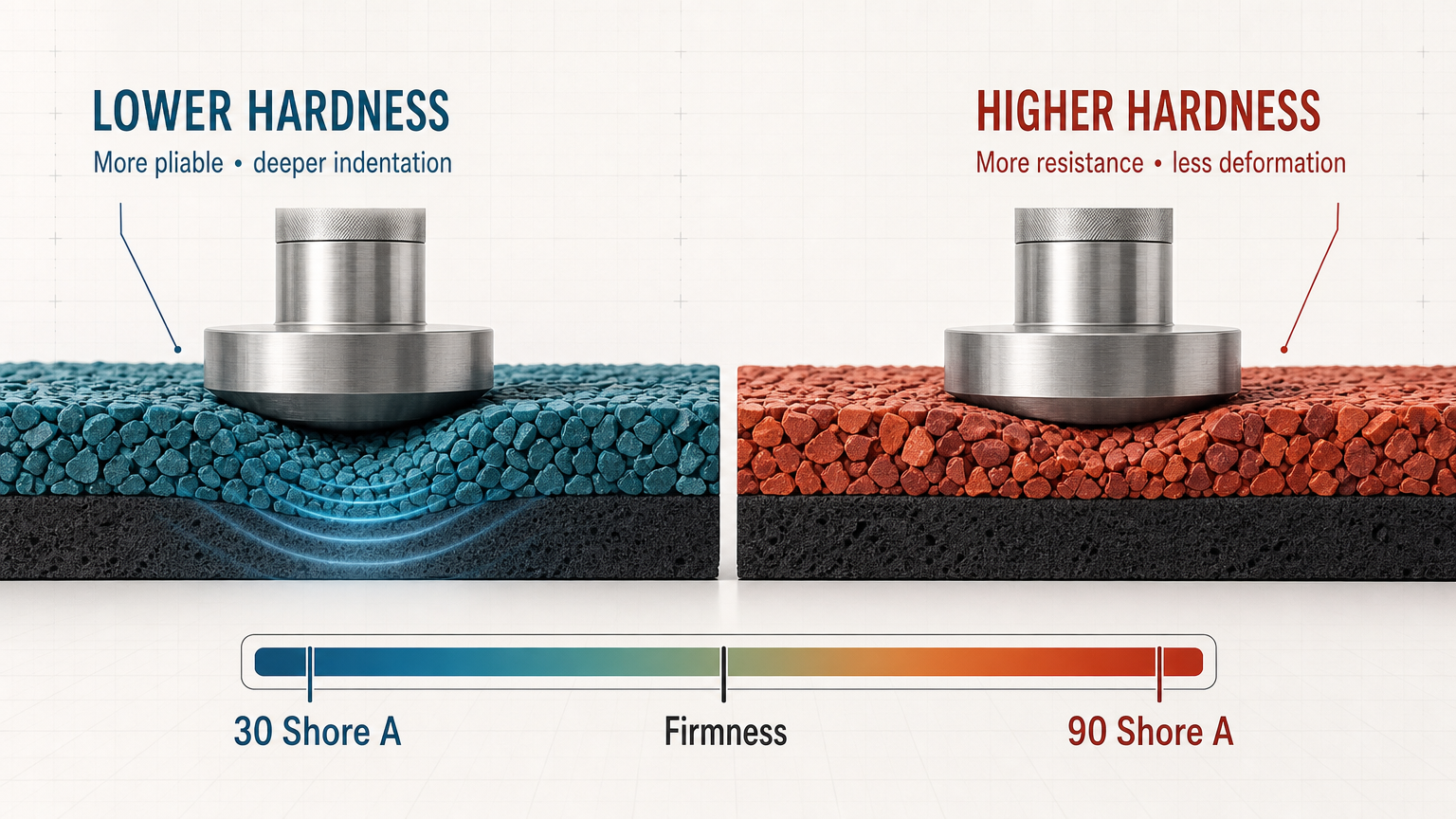
In simple terms, hardness is a material's ability to resist being indented or deformed when pressure is applied. For EPDM granules, this isn't about being "rock-hard" or "pillow-soft." It's about a precisely engineered level of firmness that dictates how the final surface will behave. A higher hardness value means the granule is more resistant to indentation, while a lower value indicates it's softer and more pliable.
Think of it as the foundational characteristic that influences everything else. This single property will determine a surface's shock absorption, durability, and even its lifespan. The variation in EPDM hardness is vast, with formulations ranging from very soft (around 30 Shore A) to extremely firm (up to 90 Shore A). This allows us to tailor surfaces for specific needs, from cushioned playground flooring to resilient running tracks.
My Experience with Measuring EPDM Granules Hardness: The Shore A Scale
To ensure quality and consistency, we need a standardized way to measure hardness. In the world of elastomers and rubbers like EPDM, the go-to method is the Shore Durometer test. Specifically, we use the Shore A scale, which is designed for flexible to semi-rigid materials.
The process involves a device called a durometer. This tool has a small, pointed indenter that is pressed into the rubber sample under a controlled force. The depth of the indentation is measured and translated into a number on the Shore A scale, from 0 (extremely soft) to 100 (completely rigid). For example, a rubber band might measure around 20A, while the tread of a car tire is closer to 60A or 70A.
There are other scales, like Shore D for hard plastics, but Shore A is the most relevant for the EPDM granules used in surfacing. This measurement is not just a quality control check; it is a critical specification. A deviation of just a few points on the Shore A scale can significantly alter a surface's performance characteristics. This is why precise measurement, following standards like ASTM D2240, is a fundamental part of my professional practice.
The Critical Hardness Application of EPDM Rubber Granules: Why My EPDM Hardness Selection Dictates Comfort, Durability, and Safety
Choosing the right EPDM granule hardness is not an arbitrary decision—it's a calculated choice that directly engineers the performance of the final surface. From the cushioned feel under a child's feet to the responsive energy return for an athlete, hardness is the invisible architect of the user experience. My years in this field have shown me that a deep understanding of how hardness influences comfort, durability, and safety is what separates a good surface from a great one.
How EPDM Hardness Impacts Comfort and User Experience
The "feel" of a surface is its most immediate and noticeable quality, and this is predominantly controlled by the hardness of the EPDM granules.
- Softer Granules (Lower Shore A): Granules with a lower Shore A value excel at shock absorption. When you walk, run, or jump on a surface made from softer granules, it compresses more easily, dissipating the impact energy that would otherwise travel up your joints. This creates a cushioned, comfortable experience, which is why softer granules are the preferred choice for playgrounds, walking paths, and recreational areas where user comfort is paramount. [1
- Harder Granules (Higher Shore A): Conversely, harder granules create a firmer, more responsive surface. While they offer less cushioning, they provide the stability and energy return required for athletic performance. This firmness is crucial for applications like running tracks, where athletes need a surface that propels them forward rather than absorbing their momentum.
The ultimate goal is to match the hardness to the intended user experience, ensuring the surface feels right for its purpose.
Ensuring Durability and Longevity Through Optimal Hardness
From a facility owner's perspective, a surface is a long-term investment. Its durability is directly linked to the hardness of the EPDM granules.
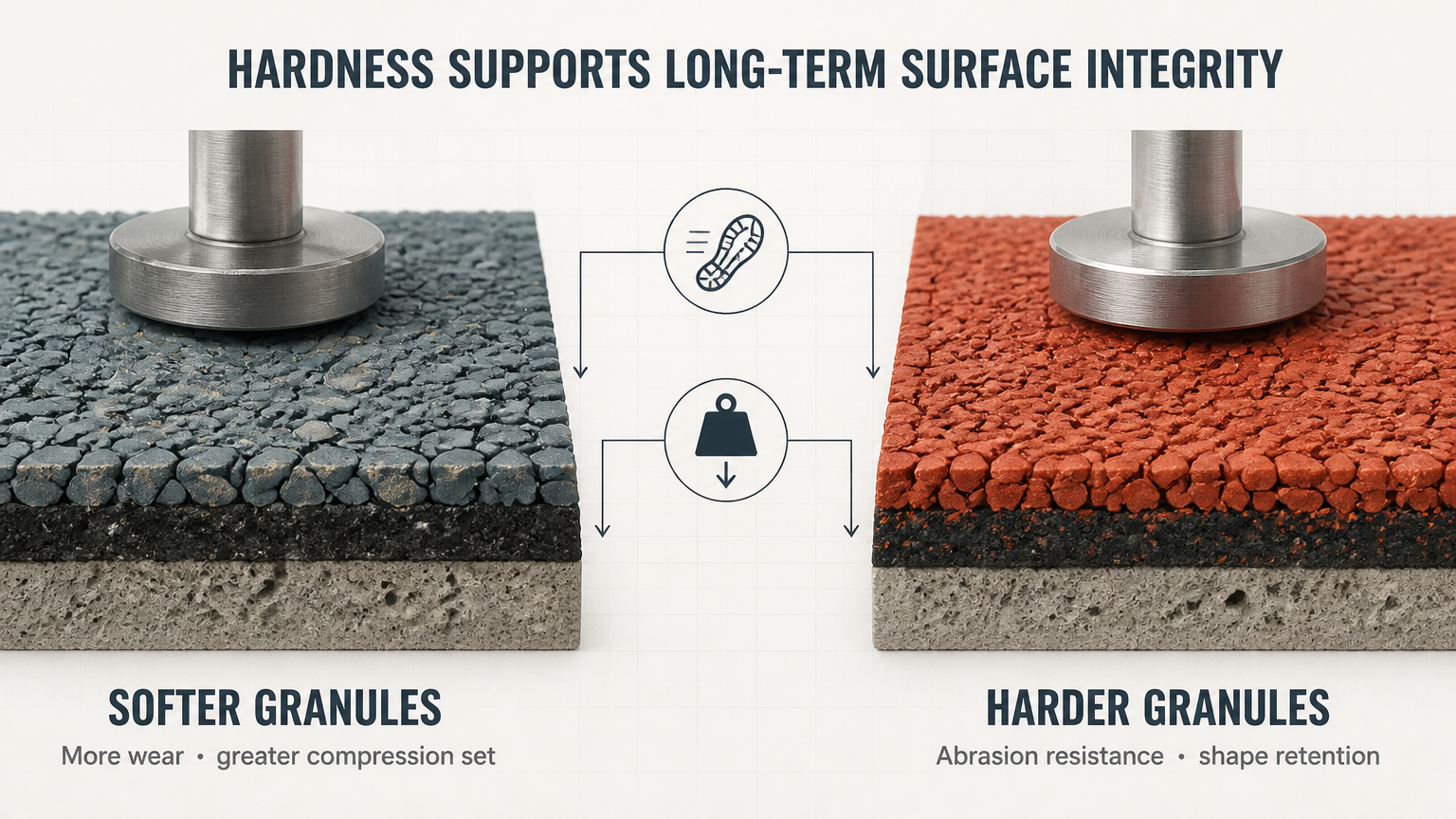
Harder granules (higher Shore A values) are inherently more resistant to abrasion, wear, and tear. Think about the constant friction from running shoes on a track or the shuffling of feet in a high-traffic play area. A harder granule will better withstand this physical stress, resisting scuffing, tearing, and "fuzzing" over time.
Furthermore, harder granules exhibit better compression set resistance. This means they are less likely to remain permanently indented after being subjected to heavy weight, such as playground equipment or athletic gear. Softer granules, while comfortable, are more susceptible to this type of degradation, which can shorten the surface's effective lifespan. By selecting a harder granule, we build a surface that maintains its integrity and appearance for years, even under heavy use.
Hardness and Safety: Reducing Risks on Play Surfaces
Nowhere is hardness more critical than in playground design. The primary safety concern on a playground is injury from falls. The ability of a surface to cushion a fall is measured by its Critical Fall Height (CFH). This is the maximum height from which a person can fall without sustaining a life-threatening head injury, as defined by safety standards like ASTM F1292 in the US and EN 1177 in Europe.
This is where the choice of EPDM hardness becomes a matter of safety engineering:
- Softer Surfaces for Higher CFH: A surface made from softer EPDM granules will have better impact attenuation, meaning it can absorb more energy from a fall. This results in a higher CFH rating. For playground equipment like tall slides or climbing frames, a surface with a high CFH is not just recommended—it's mandatory. The surface's thickness and the presence of a shock-absorbing SBR base layer also play a huge role, but the hardness of the top EPDM layer is a key contributor to the overall safety system.
The texture of the granules also contributes to slip resistance, another crucial safety factor, especially in wet conditions like those found at splash pads or pool decks. A properly formulated EPDM surface provides excellent grip, helping to prevent slips and falls in the first place.
The Interplay of Elasticity, Comfort, and Safety: My Perspective
It's vital to understand that hardness does not exist in a vacuum. It works in concert with elasticity—the material's ability to return to its original shape after being deformed. A high-quality EPDM granule formulation offers a balance of both.
- For athletic tracks, the goal is controlled elasticity. The surface needs to be hard enough for durability and energy return but elastic enough to reduce stress on athletes' joints.
- For playgrounds, the focus is on shock-absorbing elasticity. The surface needs to deform upon impact (a function of lower hardness) and then return to its original state, ready to cushion the next impact.
Ultimately, my role as a specifier is to navigate the delicate balance between these properties. An excessively hard surface could compromise safety and comfort, while an overly soft one might not withstand the test of time. The art and science of surface design lie in selecting an EPDM granule hardness that optimizes this interplay, creating a surface that is simultaneously safe, comfortable, and built to last.
My Guide to Optimal EPDM Hardness Selection: Utilizing Our Granules Hardness Chart for Specific Applications of EPDM Rubber Granules
Selecting the right EPDM granule hardness is a decision that requires both technical knowledge and a practical understanding of the end-use environment. There is no single "best" hardness; instead, the optimal choice is always application-dependent. Over the years, I've developed guidelines based on performance requirements, safety standards, and user expectations. This has allowed me to create a mental—and now physical—chart to guide clients toward the perfect specification for their project.
Recommended EPDM Hardness by Application
To simplify the selection process, I've created this reference table. It provides a clear overview of the recommended Shore A hardness ranges for the most common applications, aligning the material properties with the performance demands of each environment.
| Application | Recommended Shore A Hardness | Primary Considerations |
|---|---|---|
| Children's Playgrounds | 30–50 Shore A | Maximum shock absorption, high Critical Fall Height (CFH) rating, user comfort. |
| Running Tracks & Sports Fields | 50–70 Shore A | Durability, wear resistance, optimal energy return, stability underfoot. |
| Water Parks & Pool Decks | 40–60 Shore A | High slip resistance (wet & dry), comfort for bare feet, resistance to chlorine and UV. |
| Multipurpose Recreational Areas | 50–65 Shore A | A balance of durability for sports and cushioning for general activity. |
| Walkways & Landscaping | 60–75 Shore A | High durability for foot traffic, wear resistance, and color stability. |
Hardness Application for Playgrounds and Recreational Areas (30-50 Shore A)
For playgrounds, safety is the undisputed top priority. The primary goal is to create a surface that can effectively cushion a child's fall. This requires granules in the softer range, typically between 30 and 50 Shore A. Granules in this range provide superior impact attenuation, which is essential for meeting the stringent Critical Fall Height (CFH) requirements set by standards like ASTM F1292. A softer surface absorbs more energy upon impact, significantly reducing the risk of serious head injuries. While a shock-absorbing base layer of SBR rubber is critical, the soft EPDM top layer ensures immediate comfort and contributes to the overall safety system.
EPDM Hardness Selection for Sports Fields and Running Tracks (50-70 Shore A)
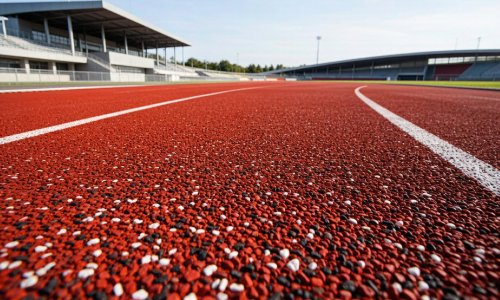
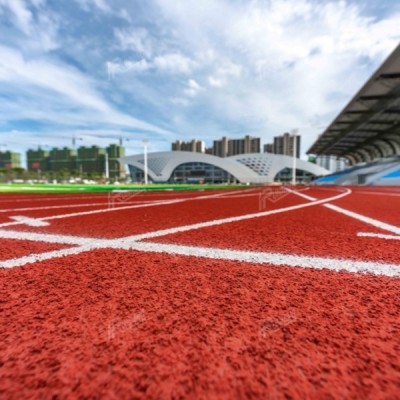
The requirements for sports surfaces are fundamentally different from those for playgrounds. Here, the focus shifts to performance, durability, and energy return. For these applications, a harder granule, typically in the 50 to 70 Shore A range, is ideal. A standard choice for many running tracks is around 60±5 Shore A, as it strikes an excellent balance.
This firmer surface offers:
- Enhanced Durability: It can withstand the repeated impact and abrasion from athletic footwear and constant use.
- Optimal Energy Return: A harder surface deforms less, returning more energy to the athlete with each step, which is crucial for running efficiency and performance.
- Stability: It provides a firm, stable footing, reducing the risk of twists or sprains that can occur on overly soft surfaces.
Leading athletic bodies like World Athletics (formerly IAAF) have strict performance criteria for track systems, and using granules in this hardness range is key to meeting those standards.
Granules Hardness Chart Guidance for Water Parks and Aquatic Environments (40-60 Shore A)
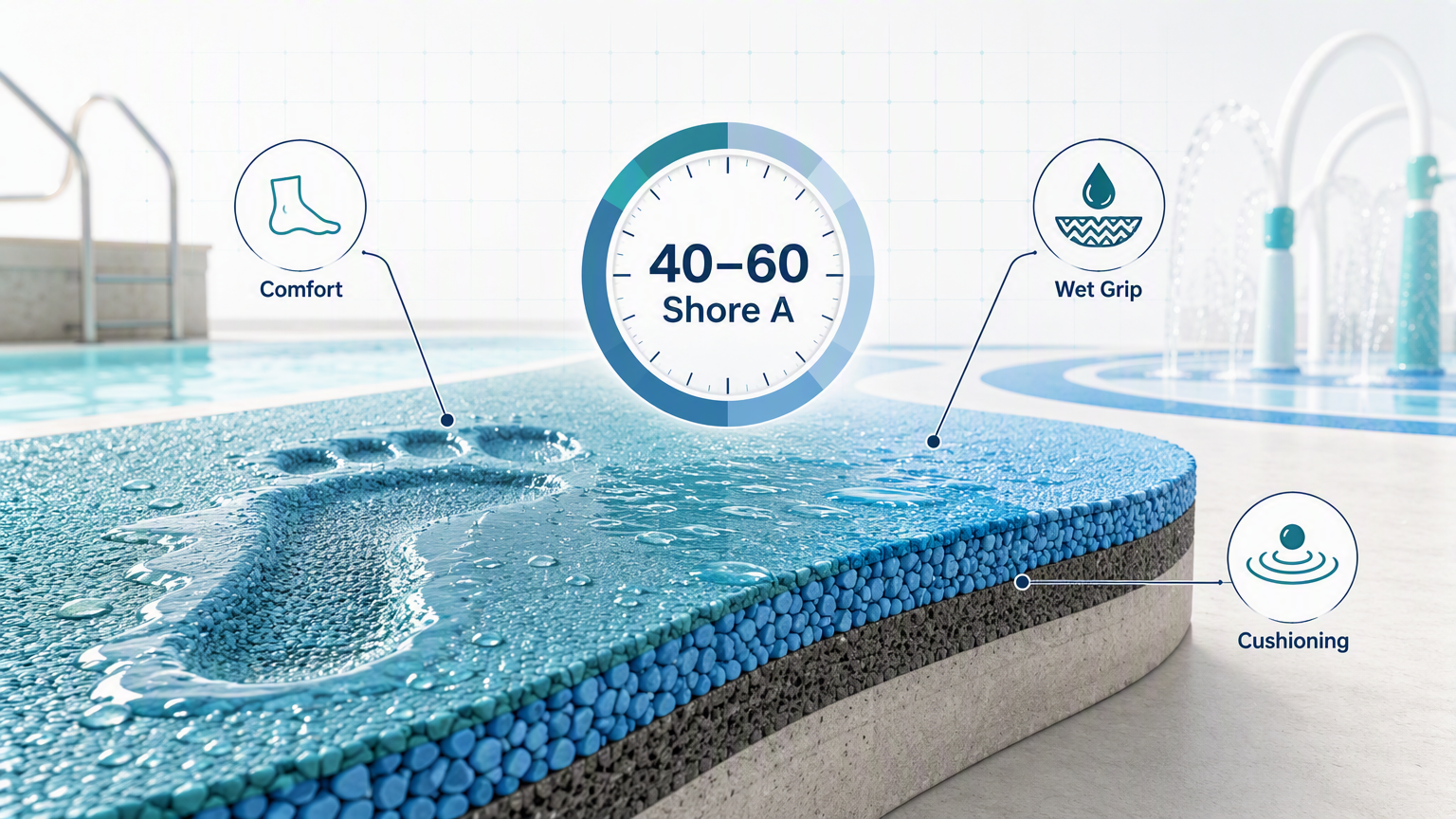
Water parks, splash pads, and pool surrounds present a unique set of challenges. The surface must be safe for bare feet, provide excellent slip resistance when wet, and withstand constant exposure to water, chlorine, and UV rays. For these environments, a hardness of 40 to 60 Shore A is recommended.
This mid-range hardness offers the perfect blend of properties:
- Comfort: It's soft enough to be comfortable for bare feet.
- Slip Resistance: The texture of the granules provides excellent grip, even when the surface is soaked.
- Safety: It offers enough cushioning to mitigate injuries from minor slips and falls.
Coupled with a formulation that includes superior UV and chemical resistance, this hardness range ensures a safe, durable, and inviting surface for all aquatic activities.
Why the Right EPDM Granules Hardness is Key for Surface Feel and Satisfaction
Ultimately, the technical specification of hardness translates directly into user satisfaction. A playground that feels too hard won't inspire confident play. A running track that feels too soft and spongy will frustrate athletes and hinder performance. A pool deck that feels abrasive or slippery will detract from the leisurely experience.
My role is to serve as an expert guide, helping clients navigate these choices. By understanding the specific demands of their project and using proven hardness ranges as a starting point, we can engineer a surface that not only meets technical and safety standards but also delights the people who use it every day.
FieldsMaster's Commitment to EPDM Rubber Granules Hardness: My Expertise in Granules Hardness Selection and Optimized Hardness Application
At FieldsMaster, we don't just sell EPDM granules; we provide comprehensive surface solutions built on a foundation of expertise and precision. Our commitment to quality begins with a deep, technical understanding of material properties, and no property is more fundamental than hardness. We have honed our processes to ensure that every granule we produce meets exact specifications, allowing us to deliver surfaces optimized for performance, safety, and longevity. This dedication is reflected in our standard offerings and our bespoke customization services. For a complete overview of our solutions, please view our comprehensive range of products.
Our Standard: FieldsMaster's Balanced EPDM Hardness (60±5 Shore A)
Through years of research, development, and in-field application, we have established an industry-leading standard for EPDM granule hardness. Our primary product line is engineered to a hardness of 60±5 Shore A. This specific range was not chosen by chance. It represents what we believe to be the most versatile and effective balance for a wide array of applications, from multipurpose school sports courts to recreational running tracks.
A hardness of 60 Shore A provides an optimal blend of:
- Durability and Wear Resistance: Firm enough to withstand substantial foot traffic and athletic activity without premature degradation.
- Comfort and Elasticity: Soft enough to provide necessary shock absorption, reducing stress on joints and enhancing user comfort.
- Proven Performance: This hardness level is a widely accepted standard for professional-grade EPDM running tracks and high-quality recreational surfaces.
This balanced approach ensures that our clients receive a product that is robust, reliable, and performs exceptionally well across various conditions. It's a testament to our commitment to delivering value and quality in every bag.
Tailoring EPDM Hardness to Your Unique Project: Our Customization Service
While our 60±5 Shore A standard meets the needs of many projects, we recognize that true excellence often lies in customization. Every project has unique requirements, whether it’s a therapeutic playground needing extra-soft cushioning or a professional athletic facility demanding a specific level of surface reactivity.
This is where our customization service comes into play. We have the manufacturing capability and technical expertise to adjust the hardness of our EPDM granules to your precise specifications. Our team works closely with you to understand the specific demands of your project, including:
- Intended Use: High-impact sports vs. low-impact recreational use.
- Safety Requirements: Target Critical Fall Height (CFH) ratings.
- User Demographics: Surfaces for young children, professional athletes, or the general public.
- Environmental Conditions: Extreme temperatures or specific chemical exposures.
By tailoring the hardness, which can range from a soft 40 Shore A to a firm 90 Shore A, we ensure that the final surface is perfectly engineered for its purpose, maximizing both performance and lifespan.
Achieving Superior Performance with Precision Hardness Application
Our commitment to hardness goes beyond simply manufacturing to a target number. It's about ensuring that the hardness translates into real-world performance. This is achieved through rigorous quality control and a holistic understanding of the entire surface system.
We ensure that every batch of EPDM granules is tested with a durometer to confirm it falls within the specified tolerance. This consistency is crucial, as variations in hardness can lead to an uneven or underperforming surface. Furthermore, our expertise extends to advising on how hardness interacts with other system components, such as the binder percentage and the thickness of the SBR shock pad base layer. By controlling and intelligently applying the principle of hardness, we help our clients achieve surfaces that are not just compliant, but superior in every measurable way.
Conclusion
From my perspective, EPDM rubber granule hardness is far more than just a number on a technical data sheet; it's a fundamental aspect we consider daily to deliver top-tier, safe, and long-lasting surfaces for a variety of critical applications. This single property is the cornerstone of surface performance, dictating everything from an athlete's energy return to a child's safety during play.
By carefully addressing EPDM hardness selection, we ensure every surface we help create provides the best possible experience, whether it's a vibrant playground designed for maximum fall protection, a high-performance sports field engineered for durability, or a comforting water park area that is both slip-resistant and pleasant underfoot. Our commitment is to leverage this crucial parameter to build environments that are not only functional but also safe, reliable, and enjoyable for years to come. I encourage you to consider this vital element in your next project and share this insight with others to elevate the standard of surfaces everywhere.
Frequently Asked Questions (FAQs)
1. What is EPDM rubber granule hardness and why is it important? EPDM hardness is the material's resistance to indentation, measured on the Shore A scale. It's critically important because it determines the surface's core characteristics: comfort, durability, and safety. A softer granule provides more shock absorption for playgrounds, while a harder granule offers the wear resistance needed for running tracks.
2. How is EPDM hardness measured? It is measured using a device called a durometer, which presses a specific type of indenter into the rubber sample. The resistance to this indentation is registered as a value on the Shore A scale, typically ranging from 0 to 100. Higher numbers indicate a harder material.
3. What is the best Shore A hardness for a playground? For playgrounds, a softer range of 30-50 Shore A is generally recommended. This lower hardness provides superior shock absorption and helps achieve a higher Critical Fall Height (CFH) rating, which is essential for protecting children from fall-related injuries.
4. What Shore A hardness is recommended for a running track? Running tracks require a firmer surface for durability and optimal athletic performance. A hardness of 50-70 Shore A is typical, with 60±5 Shore A being a common standard that balances energy return for athletes with long-term wear resistance.
5. Can the hardness of EPDM granules be customized for a specific project? Yes, leading manufacturers like FieldsMaster offer customization services. Depending on the project's specific needs—such as unique safety requirements or performance goals—the hardness can be adjusted. Formulations can be created to produce granules anywhere from very soft (e.g., 40 Shore A) to very firm (e.g., 90 Shore A).
6. Does a harder EPDM granule mean a more durable surface? Generally, yes. Harder granules are more resistant to abrasion, scuffing, and compression set (permanent indentation under weight). This makes them ideal for high-traffic areas like sports fields and walkways, leading to a longer service life.
7. How does hardness affect safety in wet areas like pool decks? In wet areas, a mid-range hardness (e.g., 40-60 Shore A) is ideal. It provides enough cushioning to be comfortable for bare feet and absorb impact from minor falls, while the material's texture ensures excellent slip resistance, even when the surface is wet. even when the surface is wet. [13, 21]