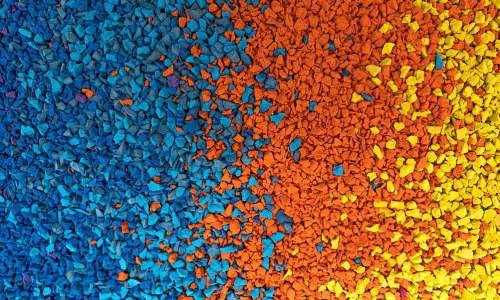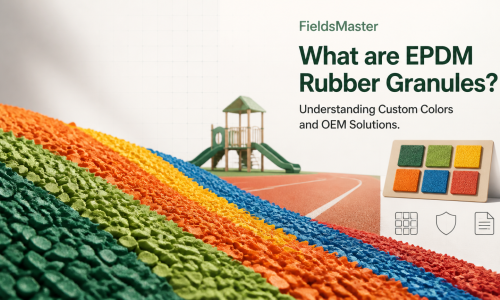


What are EPDM Rubber Granules? Understanding Custom Colors and OEM Solutions.
Have you ever wondered what makes those vibrant playground surfaces so bouncy and safe, or what gives athletic running tracks their resilient, all-weather reliability? The hero behind these surfaces is often EPDM rubber granules. I'm here to take a deep dive into the world of these incredibly versatile materials, exploring why they have become the premier choice for a vast array of applications.
Today, our focus is specifically on EPDM (Ethylene Propylene Diene Monomer) rubber. We will uncover its unique properties, explore the exciting creative possibilities that come with custom EPDM color options, and discuss how partnering with an OEM service can transform your projects, elevating them from standard to truly exceptional.
Understanding EPDM Rubber Granules: A Foundation for Quality Surfaces
EPDM rubber granules are the building blocks for high-performance, durable, and safe surfaces used in everything from school playgrounds to professional sports facilities. Unlike cheaper alternatives, EPDM is a virgin synthetic rubber engineered for superior performance and longevity. Its unique chemical structure provides unmatched resistance to environmental stressors, making it a worthwhile investment for any project demanding quality. Understanding the fundamentals of EPDM is the first step toward creating surfaces that not only look great but also stand the test of time.
What Makes EPDM the Preferred Choice for My Projects?
When I'm specifying materials for a high-stakes project, whether it's a community splash pad or a bespoke training facility, EPDM consistently comes out on top. Its balanced profile of safety, longevity, and aesthetic flexibility is simply unmatched by other materials like recycled SBR (Styrene-Butadiene Rubber) or TPV (Thermoplastic Vulcanizate). The decision to use EPDM stems from a deep appreciation for its inherent qualities, which guarantee a reliable and visually appealing outcome that clients love.
Durability, Sustainability, and Safety Beyond Compare
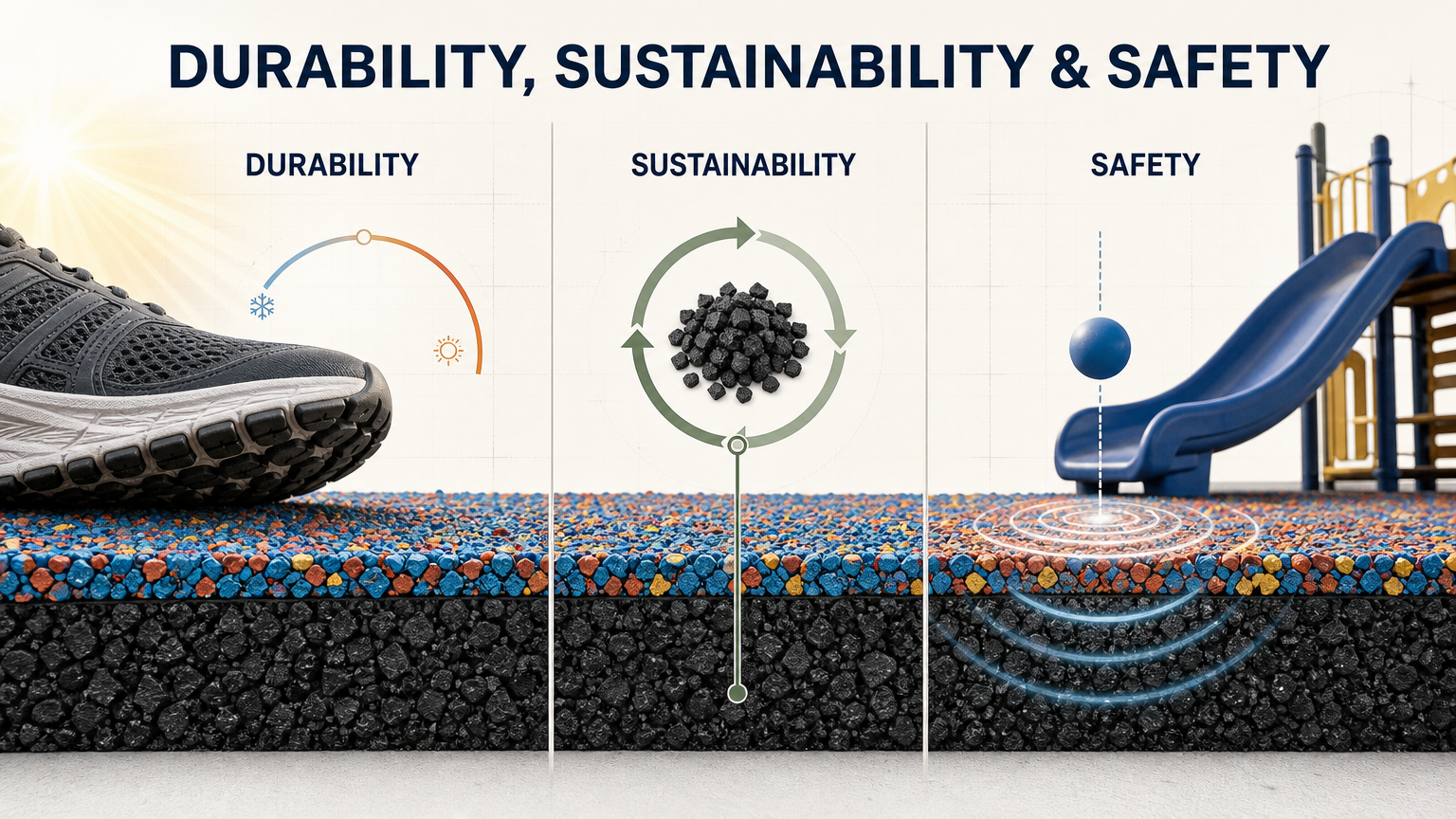
The decision hinges on three core pillars: durability, sustainability, and safety.
Unmatched Durability: EPDM's scientific name, Ethylene Propylene Diene Monomer, points to its robust chemical structure. It is a synthetic elastomer designed to withstand the harshest conditions. From scorching UV radiation and ozone exposure to extreme temperature fluctuations, high-quality EPDM granules resist cracking, hardening, and fading far better than other materials. This resilience means a longer lifespan for the surface, with some EPDM installations lasting over a decade with proper maintenance, representing a superior long-term investment.
Commitment to Sustainability: While EPDM is a synthetic polymer, it contributes to environmental goals in several ways. The durability itself is a sustainable feature, as it reduces the need for frequent replacements. Furthermore, the material is 100% recyclable after its long service life. Many EPDM surfacing systems also utilize a base layer made from recycled tires, creating a product with significant recycled content. The International Kyoto Ecology Agreement even recommends EPDM as a best-value, sustainable material.
Superior Safety: For playgrounds, athletic fields, and public spaces, safety is non-negotiable. EPDM surfaces excel in this area. Their inherent elasticity provides excellent shock absorption, which is critical for cushioning falls and minimizing the risk of injury. These surfaces are engineered to meet stringent international safety standards, such as ASTM F1292 in the United States and EN 1177 in Europe, which regulate the impact attenuation (shock-absorbing properties) of playground surfacing. A properly installed EPDM surface is rated for specific Critical Fall Heights (CFH), ensuring it provides adequate protection for the height of the adjacent play equipment. Its slip-resistant texture further enhances safety, even in wet conditions.
Not All Granules Are Equal: The Importance of Material Composition
It's crucial to understand that the term "EPDM granules" does not mean the product is 100% pure EPDM. In reality, these granules are complex compounds. The quality, performance, and price are largely determined by the material composition, specifically the type of rubber used and the percentage of actual EPDM polymer.
The market primarily offers two types of granules:
- Virgin EPDM Granules: These are made from new, purpose-manufactured synthetic rubber (Ethylene Propylene Diene Monomer). They are considered the premium option because the composition is controlled, leading to superior UV resistance, color consistency, and durability. They contain no contaminants from previous uses.
- SBR (Styrene-Butadiene Rubber) Granules: SBR is typically produced by recycling end-of-life vehicle tires. While it is an excellent, cost-effective, and environmentally friendly choice for base layers due to its fantastic shock-absorbing properties, it is not ideal for the top, visible wear layer. SBR is primarily available in black, and when dyed, it is prone to fading under UV exposure and can contain impurities from its previous life.
A key quality indicator for virgin EPDM is the polymer content. This refers to the percentage of the EPDM polymer within the granule compound, which also contains fillers, process oils, and pigments. While some suppliers may boast about very high polymer content (e.g., >24%), the industry standard generally hovers around 20-22%. A higher EPDM polymer content generally leads to better elasticity, longevity, and overall performance. However, a marginal increase in polymer content can come with a significant price jump, so it's important to balance project needs with an appropriate specification. For most applications, a quality granule with around 20% polymer content provides an excellent blend of performance and value.
Here's a comparative overview:
| Feature | High-Quality Virgin EPDM | SBR (Recycled Rubber) |
|---|---|---|
| Material Source | Virgin synthetic polymer | Recycled tires |
| Color Stability (UV) | Excellent, long-lasting vibrant colors | Poor, prone to fading and chalking |
| Color Options | Full spectrum of bright, consistent colors | Primarily black; dyed colors are less vibrant |
| Durability & Elasticity | Superior, maintains properties for years | Good, but can harden and degrade with UV exposure |
| Cost | Premium | Economical |
| Common Application | Top/wear layer for aesthetics and performance | Base/cushion layer for shock absorption |
| Purity | High, no contaminants | May contain traces of fiber, metal, or other debris |
For a high-performance, visually stunning, and long-lasting surface, a dual-layer system is often the best solution: a resilient base layer of cost-effective SBR granules topped with a vibrant wear layer of high-quality virgin EPDM granules.
Key Factors I Consider When Evaluating EPDM Granules
Selecting the right EPDM granules goes beyond just choosing a color. As a professional, I scrutinize several technical factors to ensure the final surface will perform as expected and meet all safety and quality benchmarks. This detailed evaluation process protects the project's integrity, ensures client satisfaction, and guarantees a long-lasting, reliable installation.
Ensuring Consistent Size and Quality for Optimal Performance
The physical characteristics of the EPDM granules themselves are a direct predictor of the finished surface's quality. Two of the most critical factors are granule size and the consistency of that size.
Granule Size and Distribution: EPDM granules are typically available in various size ranges, such as 0.5-1.5mm, 1.0-3.5mm, and 2.0-4.0mm. The choice of granule size has a significant impact on the final surface:
- Finer Granules (e.g., 1-3mm): Create a smoother, denser surface with a more refined texture. This is often preferred for applications requiring detailed graphic work, like logos, or for surfaces like running tracks. However, smaller granules have a larger total surface area, which means they will require a higher ratio of polyurethane binder to be properly coated, impacting the overall cost.
- Larger Granules (e.g., 2-4mm): Result in a more porous, textured surface. This enhances drainage and can provide greater shock absorption, making it a common choice for general playground areas.
The Importance of Consistency: Perhaps more important than the nominal size is the consistency of that size within a batch. If a supplier provides a batch of "1-3mm" granules that contains a high percentage of dust, fines (<0.5mm), or oversized particles (>3mm), several problems will arise during installation and over the life of the surface:
- Uneven Compaction: A mix of inconsistent sizes prevents the granules from packing together uniformly, leading to weak spots.
- Poor Finish: The surface will look irregular and unprofessional.
- Increased Binder Consumption: Excessive dust and fines absorb the expensive binder without contributing to the structural integrity, wasting material and money.
- Premature Wear: Inconsistent areas will wear out faster, leading to granule loss and surface degradation.
A reputable manufacturer will use advanced screening methods to ensure a tight particle size distribution (PSD). Before placing a large order, I always request a sieve analysis report to verify that the granules meet the specified size range and are free of excessive dust or contaminants. Reputable suppliers like FieldsMaster perform stringent quality checks to ensure all granules are strictly controlled within a consistent size range, such as 1–3.5 mm.
Navigating Environmental Considerations and Regulatory Compliance
Ensuring the health and safety of end-users—especially children on a playground—is the most critical responsibility of any project. This requires a thorough understanding of and strict adherence to local and international regulations regarding material safety and environmental impact. When sourcing EPDM granules, I always verify compliance with the following key standards:
ASTM F1292 (United States): This is the Standard Specification for Impact Attenuation of Surfacing Materials Within the Use Zone of Playground Equipment. It dictates how well a surface can absorb the shock of a fall to prevent a life-threatening head injury. Manufacturers must have their surfacing systems tested at a specified thickness to determine the "Critical Fall Height"—the maximum height from which a fall onto the surface is considered safe. I always require a current ASTM F1292 certificate for the specific thickness of the surfacing system being installed.
ASTM F3012 (United States): This standard specifically covers Loose-Fill Rubber for Use as a Playground Safety Surface. It sets strict limits for the content of hazardous materials, including extractable heavy metals like lead, cadmium, and mercury. It also mandates that the material be free of "tramp metal" (sharp metal contaminants) and meets specific particle size criteria. The U.S. Consumer Product Safety Commission (CPSC) states that rubber mulch should only be used if it is certified to meet ASTM F3012.
EN 71-3 (Europe): This is part of the European standard for toy safety and is highly relevant for playground materials. It specifies limits for the migration of certain harmful elements, such as lead, chromium, and arsenic. Compliance ensures that the materials are safe even if children have direct and prolonged contact with them.
REACH (Registration, Evaluation, Authorisation and Restriction of Chemicals): This is a comprehensive European Union regulation that controls the use of hazardous chemical substances. Reputable EPDM suppliers will provide a declaration that their products are REACH-compliant, meaning they do not contain any substances from the "Substances of Very High Concern" (SVHC) list above the permitted threshold. This provides strong assurance of the material's chemical safety.
RoHS (Restriction of Hazardous Substances): While originating in the electronics industry, RoHS compliance is another valuable indicator of material purity. It restricts the use of specific hazardous materials like lead, mercury, and cadmium, ensuring the EPDM is free from these toxic substances.
A trustworthy supplier will readily provide up-to-date certificates and technical data sheets (TDS) demonstrating compliance with all relevant regulations for your project's jurisdiction. Refusing or hesitating to provide this documentation is a major red flag.
Beyond Basics: The Power of Custom EPDM Color and Granule Properties
While standard EPDM granules offer excellent performance, the true potential of the material is unlocked through Customization. Modern manufacturing allows for precise control over not just the color, but also the physical properties of the granules, such as hardness and particle size. This capability transforms EPDM from a simple surfacing material into a highly adaptable design element. It empowers designers, architects, and facility managers to create surfaces that are perfectly tailored to the specific aesthetic, functional, and performance requirements of any project, pushing the boundaries of what's possible in surfacing design.
Unleashing Creativity with Custom EPDM Color Options
Color is one of the most powerful tools in design, capable of transforming a space from mundane to magical. In the context of EPDM surfacing, custom color is not merely a decorative choice; it's a functional element that can define spaces, guide movement, and create immersive, branded environments. The ability to move beyond a limited palette and specify exact shades is a game-changer for creative projects.
From Standard Hues to Bespoke Shades
Most suppliers offer a range of standard colors—typically 12 to 24 popular hues like bright red, blue, green, and yellow. These are excellent for many projects and are often readily available. However, a truly expert OEM partner like FieldsMaster elevates this offering by providing fully bespoke color solutions.
This opens up a world of creative possibilities:
- Brand and Team Color Matching: Schools, corporate campuses, and sports franchises can have surfaces created in their exact brand colors, reinforcing identity and creating a cohesive, professional look. An experienced manufacturer can match colors based on physical samples or industry-standard color systems like Pantone or RAL.
- Themed Designs: Playgrounds can be transformed into imaginative landscapes. I've seen projects that use custom color blends to create the appearance of a sandy beach, a flowing river, or a grassy field, complete with inlaid designs of animals or logos.
- Architectural Integration: Custom shades can be developed to perfectly complement or contrast with surrounding architectural elements, creating a harmonious and sophisticated design aesthetic in urban parks, plazas, and commercial spaces.
To make this process even more accessible, innovative suppliers offer tools like an EPDM Granules Color Mixing Tool, allowing designers to experiment with different color combinations digitally before requesting physical samples. This empowers you to visualize the final look and feel of the surface with confidence. For example, you can create a unique blend of three different shades of blue to mimic a water effect or mix beige, brown, and tan granules to create a natural, earthy pathway.
Why Vibrant, Consistent Colors Make a Difference
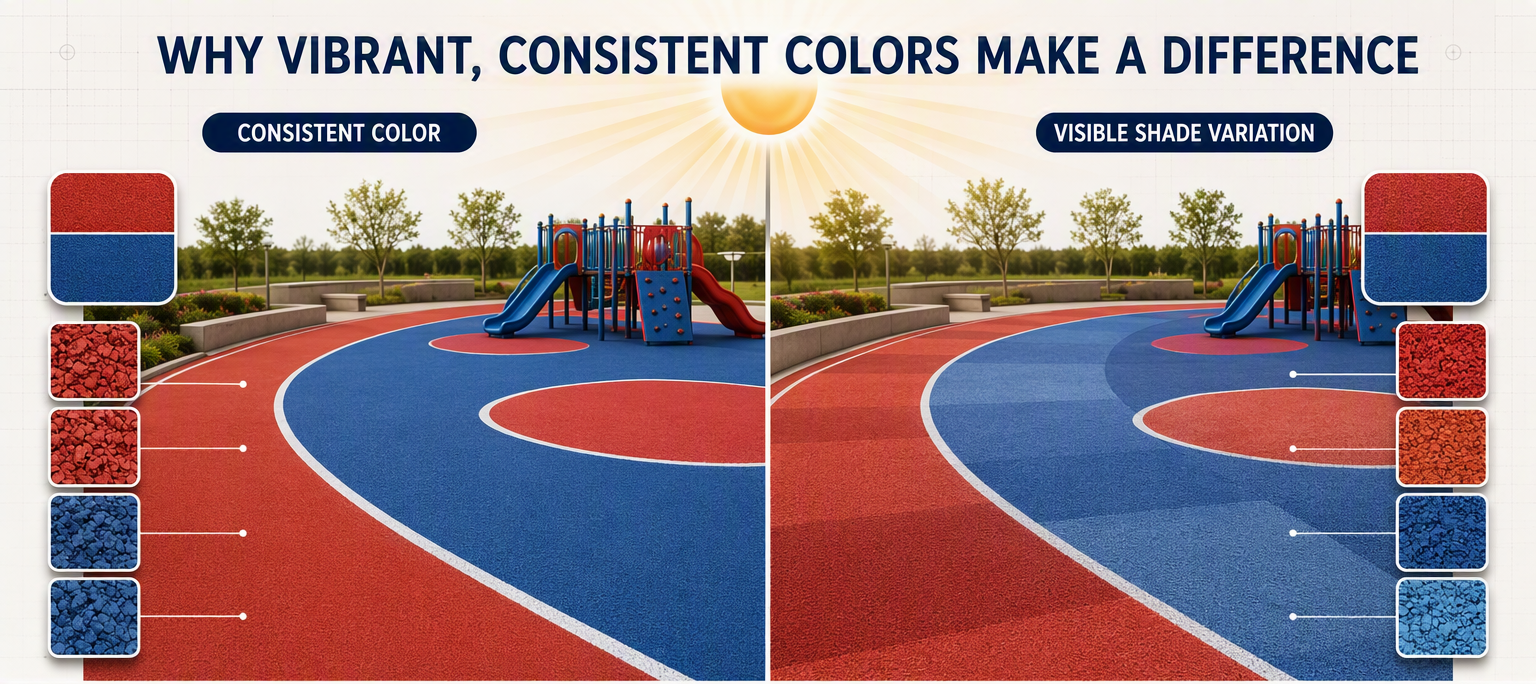
The quality of the color in an EPDM surface isn't just about the initial appearance. It's about how that color performs over time. This is where the concepts of colorfastness and batch consistency become paramount.
Colorfastness and UV Resistance: EPDM's saturated polymer backbone provides inherent resistance to UV radiation, which is the primary cause of fading and material degradation in outdoor applications. However, the quality of the pigments used is just as important. High-quality EPDM granules, like those from FieldsMaster, use automotive-grade or inorganic metal oxide pigments that are specifically chosen for their exceptional lightfastness and weather durability. Cheaper organic dyes can fade or "chalk" significantly within a few months of sun exposure, ruining the aesthetic and signaling poor material quality. For projects in regions with intense sunlight, such as parts of Australia, the Middle East, or the southern United States, it is essential to specify a high-UV-resistance formulation to ensure the colors remain vibrant for five years or more.
Batch-to-Batch Consistency: For large projects, phased installations, or future repairs, color consistency between different production batches is critical. Minor variations in pigment ratios, mixing temperatures, or raw material lots at a factory can lead to noticeable differences in color on-site, resulting in a patchy or mismatched appearance. An expert manufacturer mitigates this risk through stringent quality control processes. They often produce a "master batch" for a specific order and use it as the reference standard for all subsequent production runs, ensuring that every bag of granules delivered to the site is a near-perfect match. When planning a large project, it is a wise strategy to secure all the material needed for a continuous visual zone from the same planned batch to guarantee a uniform finish.
A vibrant, consistent color is a hallmark of a high-quality EPDM surface. It demonstrates an investment in premium materials and provides a long-lasting, aesthetically pleasing result that enhances the value and appeal of the space.
Tailoring Granules: Special Hardness and Precise Particle Size
Beyond aesthetics, the physical properties of EPDM granules can be precisely engineered to meet specific performance criteria. This level of granular control is a hallmark of a sophisticated OEM partnership and is crucial for optimizing a surface for its intended use.
Tailoring Hardness with Shore A Measurements:
The hardness of rubber is measured on a scale called Shore A Durometer. This value indicates the material's resistance to indentation, which directly relates to how "soft" or "hard" the surface feels. Standard EPDM granules typically have a hardness of around 60 ± 5 Shore A, which offers an excellent all-around balance of durability and comfort. However, this can be customized:
- Softer Granules (e.g., 50-55 Shore A): A lower Shore A value means the granule is softer and provides more cushioning. This is ideal for applications where shock absorption is the top priority, such as playground safety surfacing for toddlers or therapeutic rehabilitation areas.
- Harder Granules (e.g., 65-75 Shore A): A higher Shore A value indicates a tougher, more rigid granule. This increased durability is perfect for high-wear environments like point-elastic running tracks, golf course pathways, or heavy-traffic commercial entryways. The firmer surface provides better energy return for athletes and withstands abrasion more effectively.
Specifying Precise Particle Size Distribution (PSD):
As discussed earlier, the size of the granules is critical. An advanced supplier can do more than just provide standard ranges; they can manufacture granules to a precise particle size distribution. This allows for:
- Optimized Drainage: For outdoor surfaces in rainy climates, a specific granule blend can be engineered to maximize porosity, allowing water to drain through quickly and preventing puddles.
- Controlled Compaction: For surfaces requiring a very dense and stable finish, like a professional running track, a specific gradation of granules can be produced to ensure they pack together perfectly, creating a uniform and resilient surface.
- Aesthetic Texture control: The particle size directly influences the visual texture of the surface. By specifying a narrow size range, designers can achieve a very specific and consistent finish, from smooth and refined to more open and textured.
This ability to tailor both hardness and particle size allows me to move beyond off-the-shelf solutions and specify EPDM granules that are perfectly engineered for the unique demands of each project, ensuring optimal performance, safety, and longevity.
Enhancing Performance Through Functional Modification
The full potential of Customization extends beyond the visible to the molecular level. By working with a technically proficient OEM partner, it's possible to formulate EPDM granules with specific functional properties. This involves incorporating specialized additives into the rubber compound during the manufacturing process to enhance performance for demanding environments. This advanced capability allows for the creation of truly high-performance materials.
Key functional modifications I often consider include:
Enhanced Water Resistance (Hydrophobicity): While standard EPDM is naturally water-resistant, its performance can be elevated for applications like splash pads, pool decks, or roofing membranes. By incorporating hydrophobic additives or applying specialized surface treatments, the granules can be made to repel water even more effectively. This reduces water absorption, prevents the growth of mold and mildew, and ensures the surface dries quickly, improving both safety and longevity.
Anti-Static Properties: In certain environments, the buildup of static electricity is a significant concern. This includes data centers, electronics manufacturing facilities, laboratories, and healthcare settings where a sudden electrostatic discharge (ESD) could damage sensitive equipment or interfere with diagnostics. By integrating anti-static agents into the EPDM compound, it's possible to create a floor that safely dissipates static charge, protecting valuable equipment and ensuring operational integrity.
Flame Retardancy: Standard EPDM is combustible, which can be a liability in applications governed by strict fire safety codes, such as indoor public facilities, transportation hubs, and certain building materials. Through the addition of halogen-free flame retardants (HFFRs) like ammonium polyphosphate (APP) or magnesium hydroxide (MDH), the flammability of the granules can be significantly reduced. These additives work by releasing water, forming a protective char layer, or diluting flammable gases during combustion, helping to slow the spread of fire and increase safety. This is a critical modification for achieving compliance with building and safety regulations.
These functional modifications demonstrate how an OEM partnership can deliver EPDM granules engineered not just for standard use, but for solving specific, complex challenges across a wide range of industries.
Partnering for Perfection: Leveraging an OEM Service for Your EPDM Granule Needs
Sourcing EPDM granules is more than a simple transaction; it's about forming a strategic partnership that ensures the success and long-term value of your projects. Choosing the right Original Equipment Manufacturer (OEM) is the most critical decision in this process. An expert OEM partner acts as an extension of your own team, providing not just a product, but a complete solution—encompassing technical expertise, quality assurance, and the flexibility to meet unique project demands. This collaborative approach is the key to achieving perfection in every installation.
The Strategic Advantage of an Expert OEM Partner
In my years of experience, I've learned that the difference between a good project and a great one often lies in the quality of the supply chain. An expert OEM partner offers far more than just competitive pricing. They provide a strategic advantage through deep material science knowledge, rigorous process control, and a commitment to my project's specific goals. They become a trusted advisor, helping to navigate complex specifications and anticipate challenges before they arise.
What to Look for: Experience, Transparency, and Reviews
When vetting a potential OEM supplier, I follow a strict evaluation process focused on three critical areas:
Experience and Track Record: How long has the company been manufacturing EPDM granules? A supplier with decades of experience, like FieldsMaster, possesses invaluable institutional knowledge. They understand the nuances of polymerization, compounding, and quality control that newer companies may lack. I look for a proven track record, including case studies or a portfolio of successful large-scale projects. Deep experience often translates to greater reliability and better problem-solving abilities.
Transparency and Communication: A trustworthy partner is an open book. Transparency in the manufacturing process is non-negotiable. This means they should be willing to share information about their raw material sources, their production methods, and their quality control procedures. I expect clear, honest, and prompt communication. A supplier who is evasive about their polymer content, pigment sources, or certification status is an immediate red flag. As Forbes Magazine has noted, "Transparency Is No Longer An Option; It's A Must."
Reviews and References: In the industrial B2B space, formal reviews can be found on platforms like Birdeye or through industry-specific forums. I look for patterns in customer feedback regarding product quality, delivery timeliness, and customer service. Additionally, I will ask for client references, particularly from companies that have undertaken projects with similar scope and specifications to my own. Hearing directly from other professionals about their experience provides candid insights that you can't find in a marketing brochure. A supplier who is confident in their product and service will have a list of satisfied clients ready to share.
By rigorously assessing these three factors, I can confidently distinguish a true OEM partner from a simple commodity seller, ensuring my projects are built on a foundation of quality and trust.
Quality Assurance, Testing, and Industry Certifications I Value
A certificate on the wall is not enough; I need to see evidence of a deeply integrated quality culture. For me, this means a robust Quality Assurance (QA) program, comprehensive laboratory testing, and verification through internationally recognized certifications.
Quality Assurance (QA) and Laboratory Testing:
A top-tier OEM should have a multi-stage QA process that begins with raw material inspection and continues through to final product packaging. This includes:
- Incoming Material Inspection: Verifying the quality and purity of the base EPDM polymer, pigments, and additives before they enter production.
- In-Process Monitoring: Continuously checking parameters like mixing "homogeneity," temperature, and extrusion consistency.
- Finished Product Testing: Conducting a battery of tests on every production batch to ensure it meets specifications. Reputable manufacturers perform a range of tests in their own labs, including:
- Tensile Strength and Elongation at Break: Measures the granule's durability and flexibility.
- Hardness Test (Shore A): Verifies the material's resistance to indentation.
- Density and Bulk Density: Ensures consistency and helps in calculating material requirements.
- UV Resistance and Colorfastness: An accelerated weathering test to predict long-term color stability.
- Sieve Analysis: Confirms the particle size distribution and checks for dust or impurities.
A truly transparent partner like FieldsMaster has a documented inspection process, sometimes involving over 17 distinct steps, to guarantee every bag of granules meets stringent international standards before shipment. They should be able to provide batch-specific test results upon request.
Key Industry Certifications:
Beyond their internal QA, I look for third-party validation from respected international bodies. These certifications are not just logos; they represent a commitment to globally recognized standards of quality, safety, and environmental responsibility.
ISO 9001: Quality Management System: This is the foundational certification I look for. ISO 9001 demonstrates that a manufacturer has a proven, systematic approach to quality control, process documentation, and continuous improvement. It provides assurance of consistent product quality and reliable operations.
ISO 14001: Environmental Management System: This certification shows a commitment to minimizing environmental impact, managing waste responsibly, and complying with environmental regulations.
Safety & Compliance Certifications (REACH, RoHS, EN 71-3): As discussed previously, these are non-negotiable for ensuring the chemical safety of the product.
Labelling from recognized bodies (e.g., UL, BBA): While more common in finished products like roofing membranes, seeing components certified by organizations like Underwriters Laboratories (UL) or the British Board of Agrément (BBA) provides an extra layer of confidence in the material's safety and performance characteristics.
By demanding this combination of in-house testing and third-party certification, I can be confident that the EPDM granules I specify are not only compliant but are of the highest possible quality, ensuring the integrity and longevity of the final installation.
My Experience with FieldsMaster: Flexible MOQ and Comprehensive OEM/ODM Solutions
Through my work on diverse projects, I've come to rely on partners who demonstrate both technical excellence and operational flexibility. My experience with FieldsMaster exemplifies this. They stand out not only for their high-quality EPDM granules but also for their comprehensive approach to client partnerships, particularly in their OEM and ODM services.
Understanding OEM vs. ODM:
- OEM (Original Equipment Manufacturer): In this model, FieldsMaster manufactures EPDM granules based on my exact specifications. I provide the technical requirements—polymer content, color (via Pantone code or physical sample), granule size, hardness, and any functional additives—and they produce it exclusively for my project or brand.
- ODM (Original Design Manufacturer): This is a more collaborative approach. I might come to FieldsMaster with a concept, such as "a highly durable, algae-resistant granule for a water park in a tropical climate." Their R&D team will then design and prototype a formulation to meet that need. This leverages their deep material science expertise to create an innovative, purpose-built product.
The Power of Flexible MOQ (Minimum Order Quantity):
One of the most significant advantages of working with a manufacturer like FieldsMaster is their flexibility regarding order size. Many large manufacturers have very high MOQs, making it difficult to source materials for smaller, bespoke projects or to order small batches for repairs and maintenance.
FieldsMaster offers a more adaptable model. While many custom orders start at a reasonable 500kg per color, they provide flexible options, especially for their large range of in-stock items. This has been invaluable for me in several scenarios:
- Boutique Projects: For a high-end residential playground that required a unique, custom-blended color, I was able to order the exact quantity needed without being forced to purchase excess material.
- Large-Scale Rollouts: For a nationwide expansion of a fitness franchise, their massive annual capacity of 600,000 tons ensured a reliable and consistent supply chain for a multi-year project.
- Repairs and Add-ons: When a section of a two-year-old running track needed repair, their ability to produce a small, color-matched batch was crucial for a seamless fix.
This combination of comprehensive OEM/ODM capabilities and a flexible MOQ makes FieldsMaster a versatile and valuable partner, capable of supporting projects of any scale, from a single custom playground to an international network of sports facilities.
Ensuring Your Specific Project Requirements are Met
A successful project is one where the final product perfectly matches the initial vision. With a material as specific as custom EPDM granules, this requires a structured and collaborative process between me and the OEM partner. A reliable manufacturer will have a clear, multi-stage workflow to ensure that every technical and aesthetic requirement is met with precision.
Based on my experience, a best-practice OEM workflow looks like this:
Initial Consultation and Specification: The process begins with a detailed technical consultation. I provide the OEM (such as FieldsMaster) with all known project parameters:
- Application: Playground, running track, water park, etc.
- Aesthetic Requirements: Desired color (Pantone/RAL code or physical sample), color blends, and texture.
- Performance Needs: Desired hardness (Shore A), required UV resistance level, and any special functional properties (e.g., anti-static, flame retardant).
- Compliance: All required safety and environmental certifications (ASTM, EN, REACH, etc.).
Formulation and Lab Sample Production: The OEM's R&D team uses the specifications to develop a precise formulation. They create a small, lab-scale batch of the custom granules. This stage involves carefully selecting and measuring the EPDM polymer, pigments, fillers, and any special additives to create a homogeneous compound.
Sample Submission and Approval: The lab sample, along with its technical data sheet (TDS), is sent to me for evaluation. This is a critical checkpoint. I review the sample for color accuracy under various lighting conditions, texture, and overall quality. If any adjustments are needed (e.g., a slightly different shade, a minor change in hardness), I provide feedback, and the OEM produces a revised sample. This iterative process continues until I give my final approval.
Mass Production and Batch Control: Once the sample is approved, it becomes the "master standard" for the bulk order. The OEM then scales up production. During this phase, stringent quality control is essential. Automated systems and regular in-process checks ensure that every batch produced is a perfect match to the approved master standard in terms of color, size, and physical properties.
Final Quality Control and Shipment: Before the granules are packaged, a final QC inspection is performed. This includes visual checks for color purity and contaminants, as well as final verification of physical properties against the approved specs. The granules are then securely packaged in moisture-proof bags, clearly labeled with batch numbers and color codes, and prepared for shipment.
This disciplined, step-by-step process ensures there are no surprises upon delivery. It guarantees that the tons of EPDM granules arriving at the job site will be an exact match to the small sample I approved weeks or months earlier, laying the foundation for a flawless installation.
Navigating the Market: Avoiding Red Flags When Sourcing EPDM Rubber Granules
In the global EPDM market, not all suppliers are created equal. While many reputable manufacturers provide high-quality products, there are also those who cut corners to offer an appealingly low price. I've learned from experience that these initial savings almost always lead to much higher costs down the line in the form of premature failure, reputational damage, and expensive replacement. Recognizing the warning signs of a low-quality supplier is one of the most important skills in this industry.
Spotting Inconsistent Quality and Lack of Transparency
Low-quality suppliers often reveal themselves through a pattern of inconsistency and a general lack of openness. These are the red flags I am always watching for:
- Inconsistent Samples: A supplier sends you a beautiful, vibrant sample, but the next one they send is a slightly different shade or contains visible impurities. This signals a lack of process control in their factory. If they can't even get samples right, you can't trust them with a multi-ton bulk order.
- Vague or Missing Technical Data: You ask for a Technical Data Sheet (TDS), and what you get is incomplete or suspiciously vague. It might list a wide range for polymer content (e.g., "18-25%") or fail to provide specific results for tensile strength or UV testing. A refusal to provide a comprehensive TDS is a deal-breaker.
- Overuse of Fillers: The most common way to cut costs is by mixing in excessive amounts of cheap fillers, like calcium carbonate or talc. This "dilutes" the EPDM content, severely degrading the granules' elasticity, colorfastness, and lifespan. A simple field test is to try and crush a granule between your fingers; a low-quality, high-filler granule will crumble into a powder, whereas a high-quality granule will be resilient. Another test is to drop a handful in water; high-quality EPDM will float, while granules laden with heavy fillers will sink.
- Pungent Chemical Odor: High-quality EPDM granules that use modern, sulfur-free vulcanization processes should have virtually no odor. A strong, pungent chemical or "burnt tire" smell is often a sign of a cheap, sulfur-based curing process, which can lead to rapid degradation and unpleasant odors on-site, especially in the heat.
- Slow or Evasive Communication: You ask specific technical questions, and the supplier takes days to respond or answers with vague marketing-speak. This lack of transparency often means they are either hiding something about their product or they lack the technical expertise to answer. A reliable partner welcomes detailed questions and responds promptly with clear, factual information.
Spotting these red flags early in the vetting process can save you from a costly project failure and protect your professional reputation.
Why Non-Compliance and Hidden Costs Are Deal-Breakers for Me
Beyond the immediate quality of the product, two issues can completely derail a project and turn a profitable venture into a loss: failure to meet legal compliance standards and the accumulation of unexpected costs. For me, these are absolute deal-breakers.
The High Cost of Non-Compliance:
Using materials that do not meet the safety and environmental standards of the project's jurisdiction is not just cutting a corner; it's a massive legal and financial liability.
- Legal Liability: In the unfortunate event of an injury on a playground, if the surfacing material is found to be non-compliant with standards like ASTM F1292 (for fall safety), the owner, operator, and even the installer can be held legally liable. According to the U.S. Consumer Product Safety Commission (CPSC), improper surfacing is a leading cause of playground injuries requiring hospitalization. Failing a safety audit due to non-compliant materials exposes all parties to significant legal action.
- Project Rejection and Replacement: If a building inspector, a client's safety officer, or a regulatory body discovers the materials are not certified (e.g., lacking REACH or RoHS compliance), they can halt the project and demand a full replacement at the contractor's expense. This means tearing out the entire surface and starting over with compliant materials, a financially devastating outcome.
For these reasons, I never proceed with a supplier who cannot provide clear, current, and verifiable documentation of compliance for all relevant standards. The risk is simply too great.
The Trap of Hidden Costs:
An attractively low price per kilogram for EPDM granules is often a mirage. In my experience, the cheapest initial quote can quickly become the most expensive option once all costs are factored in. Here are the hidden costs I watch out for:
- Shipping and Logistics: Does the quote include shipping to the port (FOB - Free on Board), or does it include shipping all the way to my warehouse or job site (DDP - Delivered Duty Paid)? International freight, port fees, customs clearance, and inland transportation can add a substantial amount to the final cost.
- Import Duties and Taxes: Depending on the country of origin and the local trade laws, import tariffs can be significant. A low material price from a country with high tariffs can be more expensive than a higher material price from a tariff-free region.
- Increased Binder Consumption: Low-quality granules with high dust content or smaller-than-specified particle sizes will soak up more of the expensive polyurethane binder, driving up the total material cost of the installation unexpectedly.
- Lower Coverage Rate: Cheaper granules are often loaded with heavy fillers like calcium carbonate, which increases their density. This means a 25kg bag of low-quality granules will cover less square footage at a given thickness than a 25kg bag of high-quality, lower-density granules. You end up having to buy more material to cover the same area.
- Total Cost of Ownership: A surface made with cheap granules may fail in 2-3 years, while a high-quality surface can last 10 years or more. The cost of labor and materials for a full replacement far outweighs the initial savings. A project's true cost must be measured over its entire lifecycle, not just the upfront purchase price.
A professional OEM partner provides a transparent, all-encompassing quote that clearly outlines what is and isn't included. They help me calculate the true, landed cost of the material and focus on the long-term value and total cost of ownership, which is the only way to make a sound financial decision.
Key Takeaways
Choosing the right EPDM rubber granules is a decision that impacts the safety, durability, and aesthetic success of any project. It goes far beyond simply picking a color. From understanding the core chemistry of the material to evaluating the operational integrity of a supplier, every detail matters. This guide has walked through the critical factors that I, as a seasoned professional, prioritize to ensure every surface stands on a foundation of excellence.
Here’s a summary of the most important points to remember:
Quality is Non-Negotiable: The foundation of a great surface is high-quality virgin EPDM. It provides superior durability, UV resistance, and colorfastness compared to cheaper alternatives like recycled SBR. The material's composition, especially the polymer content and use of high-grade pigments, directly dictates its long-term performance.
Master the Technical Specifications: Pay close attention to the details. Consistent granule size (e.g., 1-3mm or 2-4mm) is crucial for a uniform finish and proper binder consumption. Particle Size Distribution (PSD) reports are essential. Furthermore, the granule hardness, measured in Shore A, should be tailored to the application—softer for playgrounds, harder for high-traffic tracks.
Compliance Is Your Shield: Never compromise on safety and environmental regulations. Insist on seeing current certificates for key standards like ASTM F1292 (impact attenuation), ASTM F3012 (heavy metals), REACH, and RoHS. Using non-compliant materials exposes you to immense legal and financial risk.
Embrace the Power of Customization: The ability to customize is what elevates a project from standard to exceptional. A true OEM partner can provide bespoke colors matched to Pantone or RAL standards, adjust granule hardness, and even integrate functional modifications like enhanced water resistance, anti-static properties, or flame retardancy. This level of Customization allows for surfaces perfectly engineered for their purpose.
Choose a Partner, Not Just a Supplier: The most critical decision is selecting your OEM manufacturer. Look for a partner with deep experience, a transparent manufacturing process, and verifiable customer reviews. A flexible MOQ (Minimum Order Quantity), comprehensive OEM/ODM solutions, and a structured workflow from sample approval to mass production are hallmarks of a reliable partner like FieldsMaster.
Beware of Red Flags and Hidden Costs: A price that seems too good to be true usually is. Watch out for inconsistent samples, vague technical data, and pungent odors, which signal low-quality materials laden with fillers. Always calculate the total cost of ownership, factoring in shipping, duties, increased binder usage, and the high cost of premature failure, not just the initial price per pound.
Ultimately, investing in high-quality, custom EPDM granules from a trustworthy OEM partner is an investment in peace of mind. It ensures your projects are safe, beautiful, and built to last, protecting your reputation and delivering long-term value to your clients.
Frequently Asked Questions (FAQ)
Navigating the world of EPDM granules means asking the right questions. Here are clear, concise answers to some of the most common queries I encounter from clients and colleagues.
1. What is the real difference between EPDM and SBR rubber granules?
The primary difference lies in their origin and intended use.
- EPDM (Ethylene Propylene Diene Monomer) is a virgin synthetic rubber specifically engineered for surfacing. Its key advantages are superior UV resistance, vibrant color options, and excellent durability in outdoor conditions. It is the premium choice for the visible top layer of a surfacing system.
- SBR (Styrene-Butadiene Rubber) is typically produced by recycling vehicle tires. It is extremely cost-effective and provides fantastic shock absorption. However, it is almost always black and has poor resistance to UV degradation, which causes it to become brittle and fade over time. SBR is best used as the dark, cushioned base layer underneath a colorful EPDM wear layer.
In short, a high-quality system often uses both: SBR for the hidden, shock-absorbing base and EPDM for the durable, colorful top layer.
2. How long does an EPDM rubber surface typically last?
A professionally installed EPDM surface using high-quality materials can have a remarkable lifespan. With regular, basic maintenance, you can realistically expect a service life of 15 to 30 years. Some studies and real-world examples show EPDM roofs lasting 50 years or more. The final lifespan depends on factors like the quality of the installation, the thickness of the wear layer, the intensity of use, local climate conditions (especially UV exposure), and the consistency of maintenance.
3. Are EPDM rubber granules safe or toxic?
When sourced from a reputable manufacturer, high-quality virgin EPDM granules are non-toxic and safe for children and pets. This is a critical point of distinction. These premium granules are certified to meet stringent international safety standards like ASTM F3012, EN 71-3, REACH, and RoHS, which limit the presence of heavy metals, polycyclic aromatic hydrocarbons (PAHs), and other harmful substances.
Concerns about toxicity often arise from low-quality, unregulated rubber products, particularly those derived from recycled sources where the origin of the material is unknown. This is why always demanding to see up-to-date safety certifications is non-negotiable. Reputable EPDM granules do not contain the harmful chemicals associated with some low-grade recycled rubbers and are considered safe for playgrounds and public spaces.
4. Can EPDM surfaces be installed in extreme cold or hot climates?
Yes, EPDM is exceptionally well-suited for a wide range of climates due to its excellent thermal stability.
- Cold Climates: EPDM remains flexible in temperatures as low as -49°F (-45°C) without becoming brittle or cracking. The main challenge for installation in the cold is the adhesive, as most polyurethane binders require ambient temperatures above 40-45°F (4-7°C) to cure properly.
- Hot Climates: EPDM can withstand continuous high temperatures up to 250°F (121°C) without degrading. The saturated polymer backbone gives it outstanding resistance to UV radiation, which is crucial for longevity and color retention in sunny climates. For extremely high-UV regions, specially formulated UV-resistant granules should be used.
5. What is the maintenance like for an EPDM surface?
EPDM surfaces are prized for being low-maintenance. Routine care is simple and effective:
- Regular Cleaning: Use a leaf blower, broom, or soft-bristled brush to remove loose debris like leaves, dirt, and sand.
- Washing: For more stubborn dirt or stains, wash the surface with water and a mild detergent solution. A gentle scrub with a soft mop or brush is sufficient. Always rinse thoroughly with clean water.
- Inspections: Twice a year, inspect the surface for any signs of damage, such as small cuts, punctures, or areas of granule loss, and check that drainage areas are clear.
- Avoid: Never use harsh chemicals, solvents, oil-based cleaners, or high-pressure power washers, as these can damage the binder and the rubber granules.
6. How much binder is needed for EPDM granules?
The amount of polyurethane (PU) binder required is calculated as a percentage of the weight of the rubber granules. This ratio is critical for ensuring a strong, durable surface.
- Typical Ratio: The industry standard for an EPDM wear layer is typically between 18% and 22% binder by weight. For example, for every 100 pounds of EPDM granules, you would need 18 to 22 pounds of binder.
- Factors Affecting Ratio: The exact ratio can depend on the binder type (aromatic vs. aliphatic), granule size (finer granules require more binder), and environmental conditions (temperature and humidity). The base layer, typically made of SBR, uses a different ratio, often around 16%. Always follow the manufacturer's specific recommendations for both the granules and the binder you are using.
Conclusion
Ultimately, choosing the right manufacturer for your EPDM rubber granules, especially when seeking custom EPDM color and a reliable OEM service, is a decision of paramount importance. It’s about far more than just acquiring a product; it’s about forging a strategic partnership that guarantees the safety, durability, and aesthetic appeal of your projects for many years to come.
By prioritizing quality, transparency, and the manufacturer's ability to customize to my exact specifications, I can confidently select materials that not only meet but consistently exceed expectations. This diligent approach ensures that every playground, running track, and recreational space I help create stands firmly on a foundation of excellence. I encourage you to adopt this same rigorous standard in your own projects. Please feel free to share this article or leave your thoughts and questions in the comments below