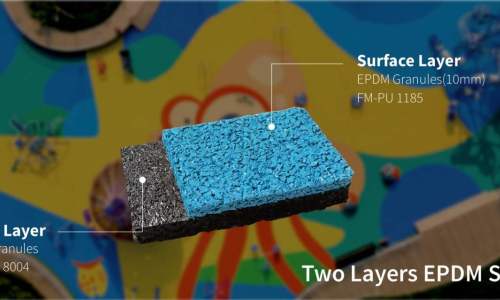


Understanding EPDM Rubber Granules: Optimizing Particle Size, Granules Mesh Size, and Particle Distribution
We know EPDM rubber granules are the foundation for creating high-quality, safe, and durable sports and playground surfaces globally. But what truly differentiates a lasting, high-performing EPDM installation from one that quickly deteriorates? It often boils down to the minute yet mighty specifics: EPDM particle size, granules mesh size, and their overall distribution. These are not just technical terms for manufacturers; they are the critical variables that dictate the final surface's performance, safety, and longevity.
Join us as we explore how optimizing these crucial characteristics ensures superior UV resistance, color stability, and elasticity, ultimately safeguarding our investment in EPDM wet-pour systems. This guide will provide the insights needed to specify with confidence, ensuring every project achieves the highest standards of quality and durability from the ground up.
Grasping the Basics: What Our EPDM Rubber Granules' Particle Size and Mesh Size Really Mean
To make informed decisions, we first need to understand the language of EPDM granules. The terms "particle size" and "mesh size" are often used, but they describe distinct, crucial properties of the material that directly impact the final surface's look, feel, and function.
Defining EPDM Particle Size: It's More Than Just Small
EPDM particle size refers to the physical dimensions of the individual rubber granules, typically expressed as a range in millimeters (mm). For instance, a specification like "1-3mm" indicates that the granules have been screened to ensure they fall within this dimensional range. It's important to understand this is a grading range, not a statement that every particle is identical.
These granules are made from a compound of Ethylene Propylene Diene Monomer (EPDM), a synthetic rubber known for its exceptional resilience, combined with fillers, pigments, and processing aids. The raw EPDM compound is vulcanized and then precisely ground into granules of specific sizes. This manufacturing process ensures the final product has consistent quality and characteristics, which is vital for high-performance surfaces.
Understanding Granules Mesh Size: The Key to Consistent EPDM Granules
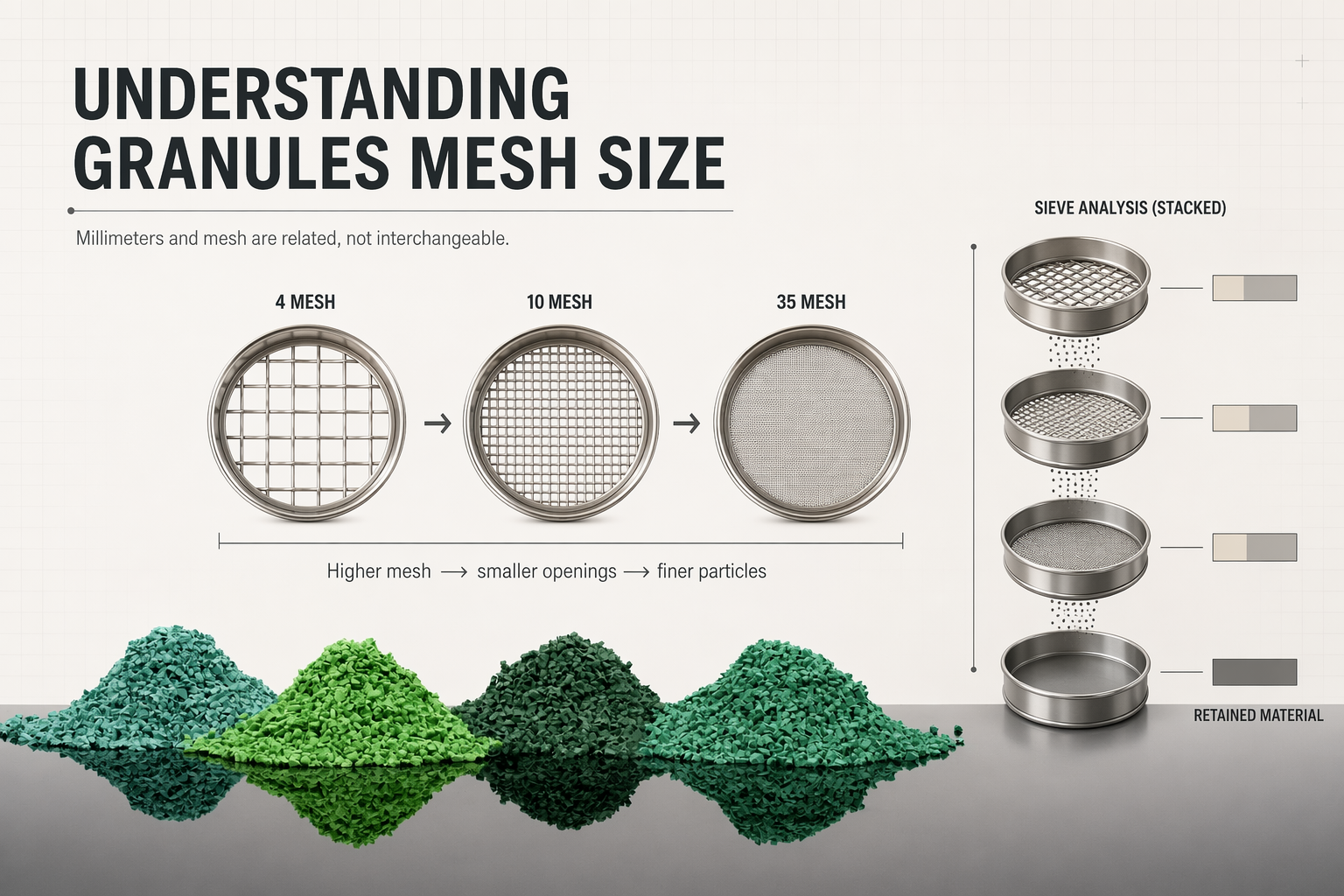
While particle size is given in millimeters, you might also encounter "mesh size." This term describes the size of the openings in the screen, or sieve, used to sort the granules. The mesh number corresponds to the number of openings per linear inch of the screen. A higher mesh number means smaller openings and, consequently, finer particles.
For example, a coarse granule might pass through a 4-mesh screen but be retained by a 10-mesh screen. A finer powder might pass through a 35-mesh screen. Though related, the millimeter range and mesh size are not directly interchangeable, so it's essential to clarify which measurement is being used when comparing products from different suppliers. The most reliable way to verify the exact distribution of particle sizes within a batch is by requesting a sieve analysis report, which shows the percentage of material retained on a series of sieves of decreasing mesh size.
Why Uniform Particle Distribution Matters for Our EPDM Rubber Granules
Beyond just the size range, the particle size distribution (PSD) is critical. A batch of granules labeled "1-3mm" could theoretically contain mostly 1mm particles, mostly 3mm particles, or an even mix. This distribution dramatically affects the surface's properties.
A uniform distribution ensures that when granules are mixed with a polyurethane binder and installed, they pack together predictably. This leads to a consistent surface density, predictable shock absorption, reliable water permeability, and a smooth, even aesthetic. In contrast, a poorly distributed batch with too many "fines" (very small particles) or "overs" (very large particles) can lead to a host of problems, including inconsistent binder consumption, weak spots, poor drainage, and an uneven finish. Therefore, consistency is key to a successful, long-lasting installation.
Decoding Common EPDM Particle Size Specifications and Their Performance Impact on EPDM Rubber Granules
The specific size of EPDM granules chosen for a project is not an arbitrary decision. Each size range is engineered to deliver distinct performance characteristics, influencing everything from the surface's final appearance to its ability to absorb impact and drain water. Understanding these differences is crucial for matching the right material to the application's demands.
Standard EPDM Particle Size Ranges We Encounter
EPDM granules are available in several standard size ranges to suit different applications. While custom sizes can be produced, the most common specifications you will encounter are:
- 0.5-1.5mm: Considered a very fine grade, often used for topcoats where a smooth, dense finish is desired or for creating intricate logos and designs.
- 1-3mm: A highly popular choice for the top layer of playground and multipurpose sports surfaces, offering a great balance of smooth texture and good coverage.
- 2-4mm: Another widely used size, particularly for running tracks and an excellent option for general playground areas. It provides slightly better drainage and impact absorption compared to finer grades.
- 3-6mm: A coarser grade often specified for specialized applications like athletic track base layers or as infill for artificial turf systems, where stability and drainage are paramount.
The choice between these is a balance of aesthetics, performance, and installation practicalities. There is no single "best" size; the ideal choice depends entirely on the system design and project requirements.
How Our EPDM Particle Size Influences Surface Properties and Durability
The size of the granules directly governs the physical properties of the finished surface. It controls how the particles pack together, the amount of binder required, and the final texture, all of which contribute to the surface's performance and longevity.
Aesthetics and Color Consistency are linked to EPDM Granules
The visual impact of a surface is heavily influenced by granule size. Finer granules, like 0.5-1.5mm or 1-3mm, pack together more tightly, creating a denser, smoother surface with a more uniform and vibrant color expression. This makes them ideal for projects where aesthetics are a top priority or where detailed patterns and logos are part of the design.
Larger granules, such as 2-4mm, create a more textured, open-pored appearance. While still providing excellent color, the individual granules are more distinct. The color in high-quality EPDM is integrated throughout the entire granule, not just a surface coating, which ensures that even as the surface wears over time, the color remains consistent. To help visualize how different colors and textures can be combined to achieve your desired aesthetic, using a color mixing system can be an invaluable tool for designers and clients.
Optimal Bonding with Binders: The Role of EPDM Particle Size
The interaction between EPDM granules and the polyurethane (PU) binder is a critical factor in the durability of a wet-pour surface. Particle size plays a direct role here by determining the total surface area that needs to be coated by the binder.
Smaller granules have a significantly higher collective surface area per kilogram than larger granules. This means a batch of 1-2mm granules will require more binder to achieve a secure bond compared to the same weight of 2-4mm granules. Failing to adjust binder ratios for finer granules can lead to insufficient bonding, resulting in granule loss and premature surface degradation. Conversely, using too much binder is an unnecessary expense. Therefore, a precise understanding of particle size is essential for calculating the correct—and most cost-effective—binder ratio. Proper cross-linking between the polymer chains, facilitated by the binder, is what gives the surface its enduring elasticity and stability.
Enhancing Drainage and Shock Absorption with Strategic EPDM Granules
EPDM surfaces are prized for their safety features, particularly shock absorption and porosity. Larger granules create more void space between particles when they are packed together. This increased void space has two major benefits:
- Improved Drainage: A more porous surface allows water to drain through it quickly, preventing puddles from forming on the surface. This makes the area usable soon after rain and reduces slip hazards, a critical feature for playgrounds and pool decks.
- Enhanced Shock Absorption: The structure created by larger granules, combined with the inherent elasticity of EPDM rubber, contributes to the surface's ability to cushion falls. While the overall system thickness is the primary factor for fall height ratings, particle size plays a role in the feel and performance of the top layer.
For this reason, systems requiring higher impact attenuation or faster drainage, such as athletic tracks or surfaces in rainy climates, might specify a coarser granule like 2-4mm for the wear layer.
The Critical Role of Consistent Particle Distribution in EPDM Rubber Granules for a Lasting Surface
As mentioned earlier, consistent particle size distribution (PSD) is just as important as the specified size range. An inconsistent batch—one with too many fines or oversized particles—undermines the entire system.
Inconsistent PSD can lead to:
- Uneven Binder Absorption: Fines will absorb more binder, potentially starving larger granules and creating weak spots.
- Compaction Issues: An unpredictable mix of sizes won't compact uniformly, leading to areas of high and low density. Dense spots can feel hard and reduce shock absorption, while low-density spots are prone to premature wear.
- Blotchy Appearance: Uneven packing can result in a mottled or inconsistent color finish.
- Reduced Porosity: An excess of fine particles can clog the voids between larger granules, impairing the surface's ability to drain water.
To avoid these issues, it is non-negotiable to source granules from a reputable manufacturer that provides a technical data sheet and a sieve analysis report for each batch. This documentation is your guarantee of quality and consistency, ensuring the product you specified is the product you get. For a closer look at the different certified granules available, you can explore our product page.
Choosing the Right EPDM Particle Size for Our Specific Project Needs: Optimizing EPDM Rubber Granules
Selecting the appropriate EPDM granule size is a critical specification that aligns the material's properties with the demands of the intended application. Whether designing a high-performance running track or a safe playground, the choice of particle size directly impacts functionality, safety, and durability.
EPDM Granule Selection for High-Performance Sports Surfaces
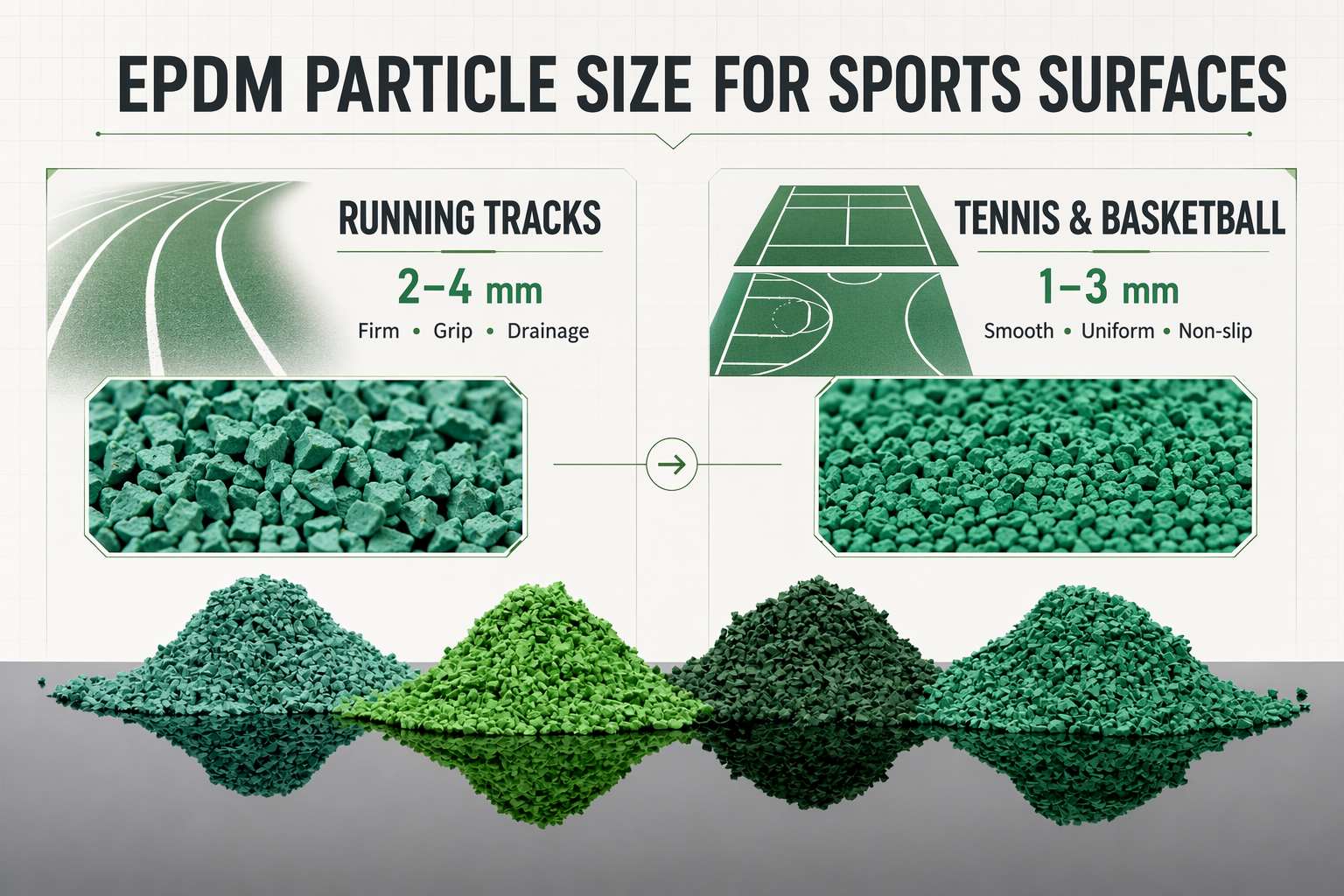
For sports surfaces like running tracks, tennis courts, and multi-sport arenas, the goal is to achieve a perfect balance of firmness, grip, and energy return while ensuring athlete safety.
- Running Tracks: A 2-4mm particle size is often recommended for the top layer of running tracks. This size provides a firm, stable surface necessary for optimal athletic performance and stud grip, while also allowing for adequate drainage in outdoor facilities. World Athletics provides technical guidelines where granule composition and particle size are cited as key variables for certifying professional facilities.
- Tennis and Basketball Courts: For these surfaces, a slightly finer granule, such as 1-3mm, can be preferable. It creates a smoother, more uniform surface that ensures a true and consistent ball bounce. The denser packing of smaller granules also contributes to a durable, non-slip finish.
EPDM Granule Selection for Playground Safety Zones: Prioritizing Consistent EPDM Particle Size
In playground environments, the primary concern is safety, specifically impact attenuation to protect against fall-related injuries.
- Main Play Areas: For general use areas under and around playground equipment, a 1-3mm or 2-4mm granule size is typically recommended for the poured-in-place wear layer. While both offer excellent safety, the 2-4mm range can provide slightly enhanced shock absorption and better porosity. The final choice should always align with the overall system design and the specified critical fall height requirements.
- Logos and Graphic Inlays: When creating intricate designs or colorful graphics within the playground surface, a finer 0.5-1.5mm or 1-3mm granule is the superior choice. The smaller particles allow for sharper lines and more detailed work, resulting in a clean and visually appealing finish.
The table below provides a summary of EPDM granule characteristics and their typical applications:
| Granule Size (mm) | Key Characteristics | Primary Applications |
|---|---|---|
| 0.5–1.5mm | Very fine, dense packing, smooth finish, high binder demand. | Intricate logos, graphic inlays, topcoats on indoor surfaces. |
| 1–3mm | Fine, smooth texture, excellent color expression, balanced properties. | Playground top layers, tennis courts, multi-sport surfaces, walkways. |
| 2–4mm | Textured feel, excellent porosity and drainage, good shock absorption. | Running tracks, general playground surfaces, pool surrounds. |
| 3–6mm | Coarse, maximum porosity, high stability, less common for top layers. | Artificial turf infill, base layers, specialized drainage applications. |
The Universal Importance of Consistent EPDM Particle Sizing, Regardless of Application
Regardless of the project—be it a world-class stadium or a local community playground—the principle of consistency remains paramount. Using high-quality EPDM granules with a uniform particle size distribution is the only way to guarantee predictable and reliable performance.
An inconsistent product can compromise every aspect of the project, from installation efficiency to the long-term safety and durability of the surface. It can lead to installation errors, budget overruns from increased binder consumption, and ultimately, a surface that fails to meet expectations and may require costly repairs. Therefore, working with trusted suppliers who provide certified materials and transparent technical data is a non-negotiable step in ensuring a successful outcome.
The Economic Reality: How EPDM Particle Size and Quality Influence Our Project Costs and Longevity of EPDM Rubber Granules
While it may be tempting to select EPDM granules based on the lowest initial price, this approach often overlooks the significant long-term financial implications tied to particle size, quality, and consistency. A savvy investment considers the total cost of ownership, where durability and low maintenance deliver far greater value over the lifespan of the surface.
Initial Investment vs. Long-Term Value with Optimal EPDM Particle Size
The choice of particle size has a direct impact on the initial material cost, primarily through binder consumption. As established, finer granules have a larger surface area and require more PU binder to ensure proper adhesion. Switching from a specified 2-4mm granule to a 1-2mm granule without recalculating binder needs can lead to a significant and unexpected increase in project costs.
However, the "cheapest" granule is rarely the most economical. Low-cost EPDM, often characterized by inconsistent sizing, high filler content, or poor-quality pigment, can lead to numerous long-term expenses:
- Premature Fading and Wear: Poor UV resistance means the surface loses its color and integrity quickly, requiring premature replacement. High-quality EPDM is engineered to resist weathering and UV damage for years.
- Cracking and Granule Loss: Insufficient EPDM polymer content or improper cross-linking results in a brittle surface that cracks and sheds granules, creating safety hazards and necessitating frequent, costly repairs.
- Failed Inspections: A surface that doesn't meet safety standards for impact attenuation (e.g., EN 1177) will fail inspection, potentially leading to liability issues and the need for a complete reinstallation.
Investing in high-quality, correctly sized EPDM from the outset ensures a surface that lasts for a decade or more with minimal upkeep, offering a much higher return on investment.
The Hidden Costs of Inconsistent Particle Distribution in Our EPDM Granules
Sourcing EPDM granules that lack a consistent particle size distribution is a recipe for hidden costs and installation headaches. An unverified batch may contain an excessive amount of dust and fine particles or, conversely, too many oversized chunks.
These inconsistencies lead to several direct and indirect costs:
- Wasted Material: Installers may have to discard portions of the material that are unusable, increasing the total volume needed for the project.
- Increased Labor Time: Sorting out inconsistencies on-site or dealing with unpredictable mixing and troweling behavior slows down the installation process, leading to higher labor costs.
- Compromised Structural Integrity: As discussed, poor distribution leads to weak spots, poor drainage, and an uneven finish, all of which contribute to a shorter service life and the need for repairs.
- Reputation Damage: For contractors and installers, a failed surface can damage their professional reputation and lead to disputes with clients.
Requesting a sieve analysis report before a bulk purchase is a simple due-diligence step that can prevent these significant and entirely avoidable costs.
Why Sourcing Certified and High-Quality EPDM Rubber Granules Matters for Our Budget
Partnering with a reputable manufacturer who provides certified EPDM granules is the most effective way to protect your budget and ensure project success. Certified products guarantee that you are receiving material that meets established industry standards for quality, safety, and performance.
High-quality EPDM is defined by several key attributes:
- High Polymer Content: A higher percentage of EPDM rubber in the compound ensures superior elasticity, durability, and longevity.
- Consistent Particle Sizing: Advanced grinding and screening processes deliver a uniform product batch after batch.
- Excellent UV and Color Stability: The use of high-performance pigments and additives ensures the colors stay vibrant and the material doesn't degrade under sun exposure.
- Purity: Certified granules are free from harmful substances like heavy metals and phthalates, ensuring they are safe for children and the environment.
While the initial cost per pound may be higher, certified EPDM granules translate into lower installation costs, minimal maintenance requirements, and a significantly longer lifespan, making them the most economically sound choice for any serious project.
Key Takeaways
Optimizing an EPDM rubber surface goes far beyond simply choosing a color. The technical specifications of the granules—specifically particle size, mesh size, and distribution—are the foundational elements that determine the project's success. This guide has detailed why these factors are critical, and here is a summary of the most important points to remember.
First, understanding the terminology is essential. Particle size, measured in millimeters (e.g., 1-3mm), defines the dimension range of the granules, while mesh size refers to the sieves used for sorting, with higher numbers indicating finer particles. Crucially, the particle size distribution (PSD) describes the consistency within a batch. An inconsistent PSD with too many fines or oversized particles can compromise the entire installation by causing uneven binder absorption, weak spots, and poor drainage. Always insist on a sieve analysis report from your supplier to guarantee quality.
Second, particle size directly impacts performance, aesthetics, and cost. Finer granules (0.5-1.5mm) create a smoother, denser surface perfect for detailed logos but require more binder, increasing costs. Medium grades (1-3mm and 2-4mm) offer a versatile balance of texture, durability, and performance, making them ideal for playgrounds and sports courts. Coarser granules (3-6mm) provide maximum drainage and stability, often used for base layers or turf infill. Matching the granule size to the specific application—be it a running track needing firmness or a playground needing shock absorption—is a non-negotiable step for achieving desired outcomes.
Third, quality is the most critical long-term investment. While lower-cost granules may be tempting, they often come with hidden costs. Poor quality EPDM, characterized by low polymer content, inconsistent sizing, and inferior pigments, leads to premature fading, cracking, and granule loss. This results in frequent, expensive repairs and a significantly shorter lifespan, negating any initial savings. Investing in certified, high-quality EPDM from a reputable manufacturer ensures superior durability, UV resistance, and safety compliance. This approach minimizes maintenance, extends the life of the surface to a decade or more, and ultimately delivers a far greater return on investment.
Frequently Asked Questions (FAQ)
1. What is the best EPDM particle size for a playground? There is no single "best" size, as the ideal choice depends on the specific requirements of the playground system. However, the most commonly recommended sizes for the top wear layer are 1-3mm and 2-4mm. The 1-3mm range offers a slightly smoother finish, which can be beneficial for younger children and for creating clear, crisp lines for games or patterns. The 2-4mm range provides a more textured surface with slightly better porosity and shock absorption. For most general playground applications, either size works exceptionally well, provided it is part of a properly designed system that meets critical fall height standards. The choice may also be influenced by installer preference and the desired aesthetic.
2. How does EPDM particle size affect the cost of my project? Particle size impacts project costs in two primary ways: the price of the granules themselves and, more significantly, the amount of polyurethane (PU) binder required. Finer granules (e.g., 1-2mm) have a much greater total surface area per pound than coarser granules (e.g., 2-4mm). This means they require a higher percentage of binder to fully coat each particle and create a strong, durable mat. Since the binder is a significant cost component of a wet-pour system, using finer granules will increase your total material expense. It is crucial to calculate binder requirements based on the specific EPDM size you are using to avoid budget shortfalls or, worse, a weak and failing surface due to insufficient binder.
3. What is the difference between EPDM mesh size and particle size in millimeters? Both terms describe the size of the granules, but they do so using different measurement systems. Particle size is a direct measurement of the granule's dimensions, expressed as a range in millimeters (mm), such as "1-3mm." Mesh size refers to the sorting screen used to grade the particles. The number indicates how many openings there are per linear inch of the screen; for example, a 10-mesh screen has 10 openings per inch. A higher mesh number corresponds to smaller screen openings and therefore finer particles. While related, the two systems are not interchangeable, and different manufacturers may use different terminology. Always clarify whether the specification is in mm or mesh and request a full sieve analysis report to get the most accurate picture of the product's size distribution.
4. Why is a uniform particle size distribution so important? A uniform particle size distribution (PSD) is critical for ensuring a consistent and durable surface. If a batch of EPDM granules contains an inconsistent mix of sizes (too many fine particles, dust, or oversized pieces), several problems can occur. An excess of fines will absorb a disproportionate amount of binder, leaving larger granules with insufficient coating and creating weak spots. This inconsistency also prevents the granules from packing uniformly, leading to areas of high and low density, which compromises both shock absorption and drainage. Furthermore, it can result in a blotchy or uneven aesthetic. Sourcing granules with a guaranteed, consistent PSD ensures predictable performance, proper binder adhesion, and a smooth, long-lasting finish.
5. Can I mix different EPDM particle sizes in one installation? Yes, and it is standard practice in multi-layer systems. A typical wet-pour playground surface, for instance, often uses a base layer of larger, coarser recycled rubber (SBR) for shock absorption and then a top "wear layer" of a specific EPDM granule size (e.g., 1-3mm) for color, UV stability, and durability. However, it is generally not recommended to mix different EPDM sizes within the same layer unless it is part of a specifically engineered system. Randomly mixing sizes can lead to the same problems as a poor particle size distribution: unpredictable binder consumption, inconsistent density, and a compromised finish. If you are creating custom textures or speckled designs, the mixing should be done with granules of a compatible size range to ensure a uniform result.
In closing, the seemingly insignificant details of EPDM particle size, granules mesh size, and particle distribution are, in fact, paramount to the overall success, performance, and lifespan of our EPDM rubber surfaces. By deeply understanding and prioritizing these factors, we empower ourselves to make informed decisions, ensuring our investments in EPDM systems yield superior durability, aesthetic appeal, and unparalleled safety for years to come. The knowledge to specify the correct granule size for the application is what separates a standard installation from a truly exceptional one.
Let us commit to sourcing EPDM rubber granules from trusted, certified manufacturers who provide transparent technical data. This guarantees consistent quality and lays the groundwork for truly resilient and remarkable installations. By doing so, we not only protect our investment but also deliver surfaces that are safe, reliable, and built to last.