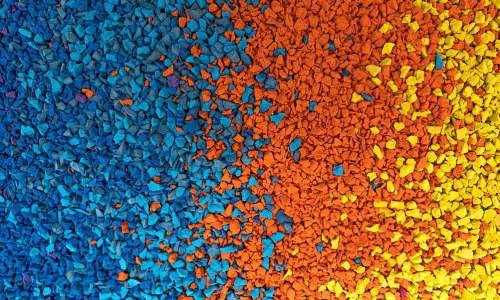


How to Choose an EPDM Granules Supplier: Your Essential Selection Guide
Choosing the right EPDM granules supplier is a critical decision that extends far beyond a simple price comparison. I know how important it is to get this right because the quality of the EPDM granules directly impacts the safety, durability, and aesthetic appeal of the final surface, whether it's a playground, running track, or recreational area. It's a choice that defines the long-term value and performance of my project.
This guide will walk us through a comprehensive EPDM manufacturer evaluation, helping me identify a partner who delivers lasting quality, not just the lowest initial price. We'll explore key dimensions of assessment, from raw material sourcing to quality control and customer support, to ensure my projects stand the test of time and provide a safe, reliable surface for years to come.
Laying the Groundwork: Why a Deep EPDM Manufacturer Evaluation Goes Beyond Price
In any project involving EPDM surfaces, the initial focus can easily drift toward cost-cutting. However, a decision based solely on the price of granules is a shortsighted strategy that often leads to greater expenses down the line. A thorough evaluation of a potential supplier reveals their true capabilities and commitment to quality, which is the real foundation for a successful, long-lasting installation.
Understanding the True Value: What My Project Gains from High-Quality EPDM Granules
Opting for high-quality EPDM granules is an investment in long-term performance and safety. The true value becomes apparent in the tangible benefits that premium granules provide. High-quality granules are manufactured for superior UV resistance, which means the vibrant colors of the surface will resist fading and degradation even after prolonged exposure to direct sunlight. This ensures the aesthetic appeal of the project is maintained for many years.
Furthermore, premium EPDM offers excellent elasticity and durability. This is crucial for safety surfaces like playgrounds, where the material's ability to absorb impact can reduce the severity of injuries from falls. The durability also means the surface can withstand constant foot traffic and harsh weather conditions without cracking, hardening, or crumbling. These high-performance characteristics are a direct result of using superior raw materials and advanced manufacturing processes, leading to a surface that is not only safer but also has a significantly longer lifespan, reducing the need for frequent repairs or premature replacement.
My First Step: Recognizing Why a Reliable Granules Supplier is Foundational for Success
The A reliable granules supplier is the bedrock of any successful EPDM surface project. A trustworthy partner does more than just supply a product; they provide consistency, expert support, and peace of mind. Consistency in granule quality, color, and size from batch to batch is essential for achieving a uniform and professional finish, especially on large or phased projects. A dependable supplier has robust quality control systems in place to guarantee that every bag of granules meets the same high standards.
This reliability extends to their entire service ecosystem. A good supplier offers transparent communication, accurate lead times, and responsive technical support. They can provide crucial documentation like technical data sheets, safety certifications, and installation guidelines. Choosing a supplier I can trust means I'm building a partnership that ensures project challenges are met with expert solutions, timelines are respected, and the final result meets and exceeds expectations. This foundational relationship is invaluable, transforming a simple transaction into a collaborative success.
My Assessment Journey: Scouting Factory Scale and R&D in This Granules Supplier Guide
A supplier's true capabilities are often reflected in the scale of their operations and their commitment to innovation. Looking beyond the product sheet and delving into their manufacturing infrastructure and research and development (R&D) efforts provides critical insights into their ability to deliver consistent quality and stay ahead of industry trends.
Peeking Behind the Scenes: What a Supplier's Factory Scale and Certification Reveal About Their Capabilities
The physical scale of a supplier's factory and their official certifications are strong indicators of their production capacity, professionalism, and commitment to quality. A large, well-organized factory suggests a higher production capability, which is crucial for ensuring they can handle large orders and meet project deadlines without compromising quality. It also often correlates with more advanced, automated machinery that contributes to product consistency.
Certifications are non-negotiable proof of quality and safety. I always look for suppliers who have internationally recognized certifications like ISO 9001 for quality management systems and ISO 14001 for environmental management. For projects focused on safety, certifications from bodies like the International Association of Athletics Federations (IAAF) for tracks or compliance with ASTM standards for playground surfaces are essential. These credentials demonstrate that a third party has audited and verified the supplier's processes and products, providing objective assurance that they meet rigorous global standards.
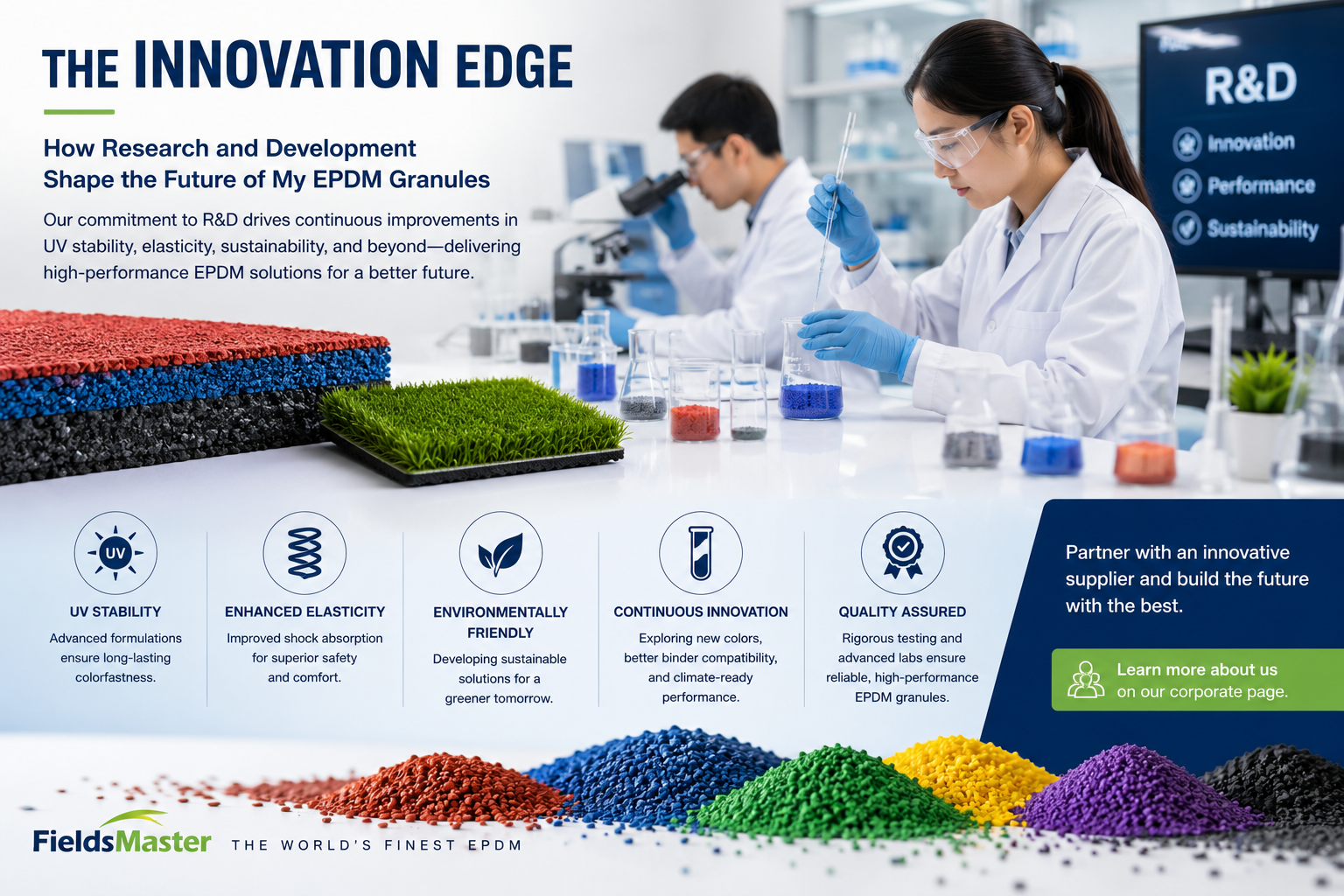
The Innovation Edge: How Research and Development Shape the Future of My EPDM Granules
A supplier's investment in research and development is a direct investment in the future quality and performance of my projects. A company with a dedicated R&D team is not just manufacturing a static product; they are actively working to improve it. This can lead to advancements in UV stability for better colorfastness, enhanced elasticity for improved safety and comfort, and the development of more environmentally friendly formulations.
When evaluating a supplier, I inquire about their R&D process. I ask about their laboratory facilities, the qualifications of their technical staff, and any recent product innovations they have introduced. A forward-thinking supplier will be eager to discuss their efforts in areas like new color development, improved binder compatibility, and granules that perform better in extreme climates. Partnering with an innovative supplier means I gain access to the latest material technology, ensuring my installations are built with the best-performing and most durable EPDM granules available. To learn more about our company's dedication to quality and innovation, I encourage you to read about our journey and values; you can learn more about us on our corporate page.
Precision Matters: My EPDM Manufacturer Evaluation of Their Robust Quality Control Systems
The difference between an average EPDM surface and an exceptional one lies in the details of its composition. A manufacturer's commitment to a robust quality control (QC) system, from the sourcing of raw materials to the final color consistency checks, is the ultimate guarantee of performance, durability, and aesthetics.
The Foundation of Quality: How Raw Material Excellence Impacts My Granules' Performance
The final quality of EPDM granules is predetermined by the quality of the raw materials used to create them. A premier supplier will be transparent about their sourcing and will not cut corners on the foundational components. The integrity of these base materials directly influences the granule's elasticity, weather resistance, and overall longevity. It's the first and most critical stage of the quality control process.
Utilizing Premium Virgin EPDM and Industrial-Grade Oils
The best EPDM granules are made from virgin EPDM (ethylene propylene diene monomer) polymer, not recycled rubber, which may contain impurities. Virgin polymer provides superior elasticity, tensile strength, and consistency, which are essential for high-performance surfaces like running tracks and playgrounds. The type of oil used in the formulation is equally important. High-quality, industrial-grade, non-aromatic oils are used to plasticize the rubber, ensuring it remains flexible and stable over its lifetime. Lower-quality or aromatic oils can leach out over time, causing the surface to become brittle, crack, or even release harmful compounds.
The Role of High-Purity Fillers and Automotive-Grade Pigments
Fillers are added to the EPDM compound to provide structure and enhance certain properties. Top-tier manufacturers use high-purity calcium carbonate or other specialized fillers that are free from contaminants. This ensures the granules have consistent density and physical properties. The most crucial element for aesthetics is the pigment. Automotive-grade pigments are the gold standard because they are formulated for extreme outdoor durability and UV resistance. Unlike cheaper pigments, they are designed to resist fading and discoloration when exposed to intense sunlight, rain, and temperature fluctuations, keeping the surface vibrant for years.
Achieving Perfect Color: My Expectation for Granule Consistency, Testing, and UV Resistance
Color is a defining feature of any EPDM surface, but achieving and maintaining that color is a complex science. My evaluation of a supplier's color quality process goes deep into their methods for ensuring consistency, their testing protocols, and their strategies for fighting the fading effects of the sun.
Addressing EPDM Granule Color Variation: Common Causes and Solutions
Color variation between batches is a common problem that can ruin the appearance of a project. This variation can be caused by several factors, including inconsistencies in raw materials, fluctuating production parameters (like temperature and mixing times), or changes in pigment formulation. A top-tier supplier mitigates these risks by implementing strict controls. They use a single, reliable source for their pigments and raw materials for each batch. Furthermore, they use computerized systems to precisely measure all components, minimizing the chance of human error.
Automated Production and Rigorous Quality Assurance for Unmatched Consistency
Automation is key to achieving unmatched consistency in EPDM granule production. Leading manufacturers utilize fully automated production lines where raw materials are weighed, mixed, extruded, and vulcanized under computer control. This process eliminates the minor deviations that are inevitable in manual operations. During and after production, a rigorous quality assurance program is essential. This includes taking samples at regular intervals and using a spectrophotometer to digitally analyze and compare colors against a master standard. Any batch that falls outside a very narrow tolerance range is rejected, ensuring that what ships to the customer is perfectly consistent.
Pre-Shipment Color Confirmation and Long-Term Weathering Simulation
To provide ultimate peace of mind, the best suppliers offer robust confirmation processes. This often involves sending a pre-shipment sample from the actual production batch to me for approval before the full order is dispatched. This guarantees that the color of the granules I receive is exactly what I expect. Beyond immediate color matching, I look for suppliers who conduct long-term performance testing. This includes using accelerated weathering chambers (QUV testers) that simulate years of exposure to sunlight, rain, and humidity in a matter of weeks. The data from these tests provide concrete evidence of the granules' UV resistance and colorfastness, allowing me to choose a product with confidence in its long-term aesthetic durability.
Ensuring My Success: What I Look for in Service Systems and Practical Verification Methods in This Granules Supplier Guide
A high-quality product is only part of the equation. The supplier's service system, communication practices, and the practical methods they offer for quality verification are what truly build a successful partnership and guarantee that the final result on-site matches the promise made on paper.
Beyond the Product: My Need for Transparent Communication and Comprehensive Supplier Support
Excellent customer support is a non-negotiable for me. I look for a supplier who provides a dedicated point of contact—someone who understands my project needs and can offer timely and accurate information. Transparent communication is critical, whether it's providing realistic production lead times, giving updates on shipping status, or offering technical advice during the installation phase. A supplier's willingness to share documentation, such as technical data sheets (TDS), material safety data sheets (MSDS), and installation guides, is a sign of their professionalism and confidence in their product. Comprehensive support also includes post-installation assistance. Knowing that my supplier will be there to help troubleshoot any issues that may arise gives me the confidence to fully endorse their product.
My Verification Checklist: How I Practically Test EPDM Quality Before Committing to a Bulk Order
Trust must be verified. Before placing a large bulk order, I employ a series of practical verification steps to ensure the EPDM granules meet my project's standards. This hands-on approach eliminates surprises and ensures the quality I've been promised is the quality I'll receive.
Requesting and Approving Samples for Bulk Orders
Requesting samples is the most fundamental verification step. However, I go beyond a simple visual check. I request a large enough sample to feel the texture, check for dust or impurities, and evaluate the uniformity of granule size and color. Most importantly, I clearly state that this approved sample will serve as the quality benchmark for the entire bulk order. A reputable supplier will understand and agree to this, often keeping a corresponding control sample at their factory to ensure the production batch matches what I approved.
Considering Factory Pre-Mixed Granules to Minimize On-Site Errors
For projects involving intricate patterns or multiple colors, on-site mixing can be a significant source of error, leading to incorrect ratios and inconsistent appearance. A valuable service that top suppliers offer is factory pre-mixed granules. They can blend different colored granules according to my exact design specifications and ratios in a controlled factory environment. This ensures perfect consistency across the entire batch and dramatically simplifies the installation process, reducing labor time and the risk of costly on-site mistakes. It's a solution that demonstrates a supplier's understanding of practical installation challenges.
Understanding Verification Processes for Customized Colors
When a project requires a custom color, the verification process becomes even more critical. The process typically starts with me providing a color reference, such as a RAL or Pantone code, or a physical sample. The supplier's R&D lab then develops a formula to match it. The key is the back-and-forth approval process. The supplier should produce a small "lab dip" sample for my review. I can then provide feedback for adjustments or approve the color. Only after I have signed off on a final physical sample should mass production begin. This methodical process ensures that the custom color I envisioned is the exact color that is delivered, without any ambiguity. For a look at the wide array of standard and custom options available, you can explore the full range of solutions on our product page.
Key Takeaways: Your Quick Reference for Supplier Selection
Choosing the right EPDM granules supplier is a decision that impacts project safety, aesthetics, and longevity. Here’s a summary of the essential points to guide your evaluation:
- Look Beyond Price: The lowest initial cost rarely equates to the best value. High-quality granules offer superior durability, colorfastness, and safety, reducing long-term repair and replacement costs. Focus on the total cost of ownership, not just the upfront price per pound.
- Evaluate Factory Scale and Certifications: A large, modern factory indicates a higher production capacity and ability to maintain consistency. Crucially, verify certifications like ISO 9001 (quality management) and ISO 14001 (environmental management). For specific applications, look for compliance with standards like ASTM for playgrounds or IAAF for athletic tracks. These are non-negotiable indicators of a professional and reliable operation.
- Prioritize R&D and Innovation: A supplier with a strong research and development department is committed to improving their product. This translates to better UV resistance, enhanced elasticity, and more reliable performance. Ask about their lab facilities, testing methods (like QUV accelerated weathering), and recent product advancements.
- Scrutinize Raw Material Quality: The foundation of a great granule is its raw materials. Insist on suppliers who use 100% virgin EPDM polymer, high-grade non-aromatic oils, pure fillers, and automotive-grade UV-resistant pigments. These components are essential for long-term stability and color retention.
- Demand Color Consistency and Control: Color variation can ruin a project. A top supplier will use automated, computerized systems for weighing and mixing to ensure batch-to-batch consistency. They should be able to provide color data from a spectrophotometer and stand by their product's color stability.
- Verify Before You Buy: Never commit to a bulk order without a thorough verification process. Request and approve a final production sample that will serve as the benchmark for your order. For complex designs, consider using factory pre-mixed granules to eliminate on-site mixing errors.
- Assess the Service and Support System: A great product needs great support. Look for transparent communication, realistic lead times, and comprehensive technical documentation. A dedicated point of contact who understands your project is invaluable for a smooth process from order to installation.
On-Site Factory Inspection: A Manufacturer's Checklist
For manufacturers who rely on EPDM granules as a raw material for their own products, a factory visit is an indispensable step. It provides insights that no brochure or website ever could. This checklist is designed from a manufacturer's perspective, focusing on ensuring a stable and high-quality supply chain.
Factory Audit: 10-Point Inspection Checklist
| # | Inspection Point | What to Look For |
|---|---|---|
| 1 | Raw Material Warehouse | Are raw materials (EPDM polymer, oils, fillers, pigments) stored in a clean, dry, organized environment? Are they clearly labeled with batch numbers and dates? This shows control over inventory and traceability. |
| 2 | Production Line Automation | Observe the level of automation. Look for computerized weighing and dosing systems for raw materials. Automated lines reduce human error and improve consistency. |
| 3 | Mixing and Kneading Equipment | Is the mixing equipment (e.g., Banbury mixer, kneader) modern and well-maintained? Consistent mixing is crucial for uniform dispersion of pigments and additives. |
| 4 | Vulcanization/Curing Process | Check the curing process (e.g., salt bath, hot air). Is temperature and time precisely controlled? Inconsistent curing can lead to variations in elasticity and hardness. |
| 5 | Granulation and Sieving Area | Inspect the process for cutting and sieving granules. Is it effective in producing a uniform particle size distribution? Look for measures to minimize dust and oversized/undersized particles. |
| 6 | Quality Control Laboratory | Is there a dedicated, well-equipped QC lab on-site? Look for essential equipment like a spectrophotometer (for color), rheometer (for curing properties), and tensile tester. |
| 7 | In-Process QC Checks | Are QC staff actively pulling samples from the production line for testing at regular intervals? This proactive approach catches issues before a whole batch is compromised. |
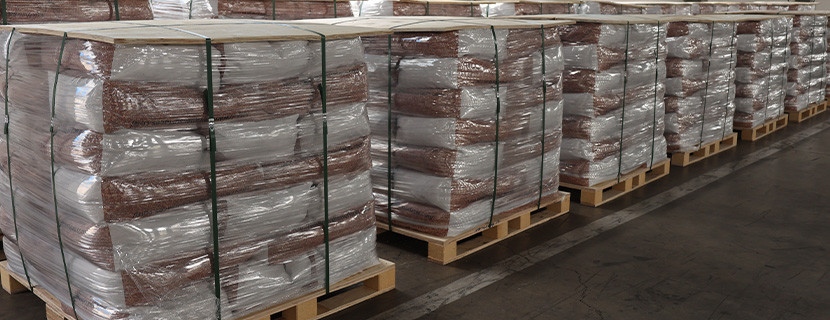
| 8 | Finished Goods Warehouse | How are the finished granules packaged and stored? Look for durable, waterproof packaging (e.g., poly-lined bags) and an organized warehouse system that prevents contamination or damage. |
| 9 | Traceability System | Can the supplier demonstrate their traceability system? They should be able to trace a finished batch back to the exact raw materials used. This is critical for issue resolution. |
| 10 | Cleanliness and Safety | Is the overall factory environment clean, organized, and safe? A well-maintained facility reflects a company culture of precision and care, which translates to the product. |
Factory Audit: 5 Must-Ask Questions
"Can you walk me through your quality control process for a single batch, from raw material intake to final pre-shipment approval?"
- Why you ask: This question tests their entire QC loop. Listen for specific checkpoints, testing methods, documentation, and what happens if a batch fails a test mid-production.
"How do you manage and guarantee color consistency between orders placed months apart?"
- Why you ask: This assesses their long-term color control strategy. A good answer will involve master color standards, use of spectrophotometers, and retaining approved samples from previous orders.
"What is your protocol if a customer reports a quality issue after installation?"
- Why you ask: This reveals their commitment to post-sales support and problem resolution. Look for a structured response involving sample analysis, on-site investigation if necessary, and a clear claims process.
"What investments have you made in your R&D and production facilities in the last three years?"
- Why you ask: This gauges their commitment to continuous improvement and innovation. A forward-thinking supplier will be proud to discuss new equipment, new testing methods, or new product formulations.
"Can you provide supply chain assurances regarding your key raw materials, especially the EPDM polymer?"
- Why you ask: This probes the stability of their supply chain. A reliable supplier will have long-term relationships with reputable polymer producers and contingency plans to avoid disruptions.
Frequently Asked Questions (FAQ)
1. What is the real difference between "virgin" EPDM and recycled rubber granules? The difference is significant. Virgin EPDM granules are manufactured directly from EPDM polymer, providing a pure, consistent material with predictable performance characteristics like high elasticity, superior UV resistance, and vibrant color. Recycled rubber granules, typically from ground-up tires ("black SBR"), are cheaper but contain impurities, have inconsistent physical properties, and often have a strong odor. While black SBR is used as a cushion layer, the top "wear layer" should always be high-quality virgin EPDM for safety, durability, and aesthetics.
2. How much color variation is acceptable between batches? In high-quality projects, virtually no visible color variation is acceptable. A top-tier EPDM supplier uses a spectrophotometer to measure color numerically. The difference between batches is measured in Delta E (dE). A dE value of less than 1.0 is generally considered imperceptible to the human eye. I would insist that my supplier guarantee a dE of 1.0 or less between the approved sample and the final production batch.
3. What does "shore hardness" mean, and why does it matter? Shore Hardness (typically measured on the Shore A scale for EPDM) indicates the hardness or stiffness of the rubber. It's a critical parameter for performance. A lower Shore A value (e.g., 60-65) means the granule is softer and more elastic, ideal for playground surfaces where impact absorption is key. A slightly higher value might be desired for running tracks to provide a firm, energy-returning surface. The supplier must be able to produce granules within a very tight hardness range to ensure the final surface performs as designed.
4. Can I really trust accelerated weathering (QUV) test reports? Yes, QUV test reports are a highly reliable industry-standard method for predicting long-term durability. The QUV chamber accelerates the damaging effects of sunlight, dew, and rain, simulating years of outdoor exposure in a matter of weeks or months. While it's not a perfect imitation of real-world conditions, it is the best available tool for comparing the relative colorfastness and UV resistance of granules from different suppliers. Always ask for these reports when evaluating a supplier.
5. Is the binder (polyurethane) as important as the EPDM granules? Absolutely. The binder is the glue that holds the entire system together. Using high-quality EPDM granules with a cheap or incorrect type of binder is a recipe for failure. There are two main types: aromatic binders and aliphatic binders. Aromatic binders are less expensive but tend to yellow over time when exposed to UV light, which can dull the color of the surface. Aliphatic binders are significantly more UV-stable and will not yellow, preserving the true color of the granules. A knowledgeable and responsible EPDM supplier will be able to advise on the correct binder type and application rate for their specific granules to ensure a successful, long-lasting installation.
Conclusion
By meticulously following these criteria for my EPDM manufacturer evaluation, I'm confident I can wisely choose a granules supplier that truly meets my projects' long-term durability and aesthetic needs. Moving beyond a simple price analysis to a deep dive into manufacturing processes, quality control systems, and service excellence is the only way to secure a partnership that delivers genuine value.
Ultimately, my investment in a top-tier granules supplier is an investment in the safety, beauty, and longevity of my installations, proving that quality always pays off and delivering peace of mind for years to come. The right partner doesn't just sell a product; they contribute to the success and legacy of the spaces we build.