

Rubber Granules Comparison: Decoding EPDM vs. SBR for Playground and Track Safety.
As a professional deeply involved in safety surfacing, I consistently encounter questions about the optimal materials for playgrounds and sports tracks, especially regarding critical fall height and overall durability. It's a complex decision, and understanding the core differences is absolutely essential.
Today, I aim to demystify these choices by providing a clear rubber granules comparison between EPDM vs SBR. We'll explore their unique properties, primary applications, and highlight specific EPDM advantages that often make it the superior long-term investment.
My goal is to offer a straightforward, first-person perspective to guide you through these options, ensuring you can make confident, informed decisions for your next surfacing project, whether it's a vibrant playground or a high-performance athletic track.
Decoding the Fundamental Differences: EPDM vs SBR Rubber Granules in Modern Safety Surfacing Applications
When specifying materials for safety surfaces, the conversation inevitably turns to two primary contenders: Styrene-Butadiene Rubber (SBR) and Ethylene Propylene Diene Monomer (EPDM). While both are forms of rubber granules used to create cushioned, safe environments, their origins, properties, and ideal applications differ significantly. Understanding these foundational differences is the first step toward making a choice that aligns with your project's budget, aesthetic goals, and long-term performance expectations.
A typical poured-in-place system involves a base layer for cushioning and a top layer for durability and aesthetics. Often, SBR is used for the base, with EPDM serving as the premium top layer, combining the cost-effectiveness of one with the superior performance of the other. This layered approach is a common strategy to balance cost and performance.
SBR: The Economical and Resilient Base Layer often Used in Rubber Granules Comparison
Styrene-Butadiene Rubber, or SBR, is a synthetic rubber that has been a workhorse in various industries for decades. It is a copolymer of styrene and butadiene, and its properties can be adjusted by altering the ratio of these two components. For surfacing applications, SBR is almost always sourced from recycled car and truck tires. This makes it an environmentally friendly and highly economical choice, giving a second life to millions of tires that would otherwise end up in landfills.
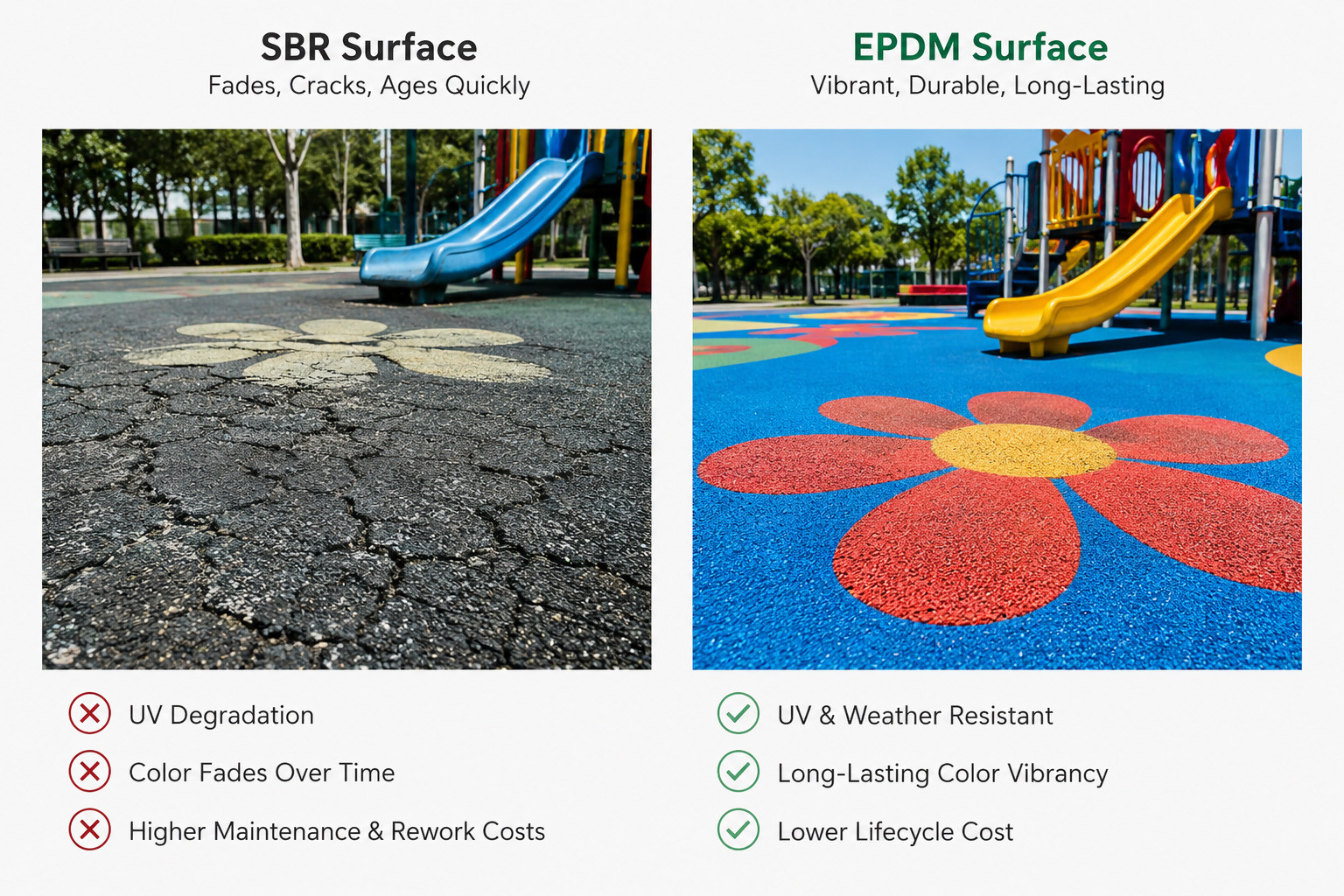
The key characteristics of SBR include good abrasion resistance, strong impact absorption, and impressive durability for indoor or base-layer applications. Because it's derived from tires, SBR granules are almost exclusively black. This is its most significant limitation for aesthetic purposes. While colored versions exist (CSBR), they are surface-dyed, which means the color is a coating that can wear off or fade over time. Furthermore, SBR's primary weakness is its poor resistance to ultraviolet (UV) radiation and ozone. When used as a top layer exposed to direct sunlight, SBR will harden, become brittle, and fade from black to gray over a few years, significantly reducing its lifespan and aesthetic appeal. For this reason, SBR is most effectively used as a shock-absorbing base layer, or "shock pad," in a two-layer poured-in-place system, where it is protected from the elements by a more resilient top coat.
EPDM: The Premium and Visually Superior Outdoor Performer with Noted EPDM Advantages
EPDM, which stands for Ethylene Propylene Diene Monomer, is a high-performance synthetic rubber engineered specifically for durability in harsh conditions. Unlike SBR, EPDM is a "virgin" material, meaning it is manufactured from raw polymers, not recycled products. Its chemical composition—a stable, saturated backbone—gives it outstanding resistance to UV radiation, ozone, extreme temperatures, and moisture. EPDM was originally developed for demanding applications like automotive seals and roofing membranes, a testament to its exceptional weather resistance.
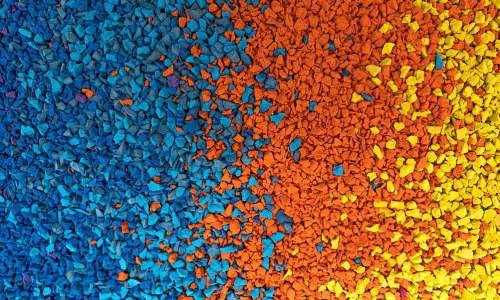
These properties make EPDM the undisputed premium choice for the top layer of any outdoor safety surface. One of the most significant EPDM advantages is its color stability. Because the pigments are integrated throughout the granule during manufacturing, the color is vibrant, consistent, and extremely fade-resistant. This allows for the creation of bright, engaging, and long-lasting designs for playgrounds and sports courts. It remains flexible in both hot and cold climates and offers excellent, long-lasting shock absorption to keep play areas safe. While the initial cost of EPDM is higher than SBR, its longevity, low maintenance, and enduring aesthetic appeal make it a sound long-term investment.
A Detailed Rubber Granules Comparison: EPDM vs SBR Across Essential Performance Dimensions
Choosing between EPDM and SBR requires a granular understanding of how they perform across several key metrics. The decision impacts not only the initial project cost but also the long-term safety, durability, and visual appeal of the surface. This section breaks down their performance side-by-side, offering a clear, data-driven comparison to guide your specification process, from a detailed table comparison to the critical aspects of safety compliance.

Weighing Your Options: An In-Depth Side-by-Side Table Comparison Guide for Rubber Granules
To truly appreciate the differences and make an informed decision, a direct comparison is essential. This table outlines five critical dimensions, providing typical parameter data to illustrate the long-term value that EPDM often represents.
| Performance Dimension | EPDM (Ethylene Propylene Diene Monomer) | SBR (Styrene-Butadiene Rubber) | Analysis & Long-Term Value Implications |
|---|---|---|---|
| 1. UV/Color Stability | Excellent: Colors are integrated (pigmented) into the virgin rubber. Minimal fading over 10-15+ years. | Poor: Typically only black. Fades to gray and becomes brittle in 1-3 years. Colored SBR is surface-coated and wears off. | EPDM offers superior long-term aesthetic value. It maintains vibrant, engaging designs, crucial for themed playgrounds and high-end facilities, eliminating the need for costly repainting or resurfacing due to fading. |
| 2. Durability & Lifespan | 10-20 Years: Exceptional resistance to weathering, ozone, and temperature extremes (-50°C to 150°C). | 3-10 Years (as top layer): Degrades under UV exposure, leading to cracking and hardening. Much longer when used as a protected base layer. | EPDM's higher initial cost is offset by a significantly longer service life. This reduces replacement frequency and delivers a lower total cost of ownership over the project's lifetime. |
| 3. Elasticity & Shock Absorption | Excellent (300-600% Elongation): Maintains high elasticity and shock absorption over its lifespan, ensuring consistent safety. | Good to Fair (200-450% Elongation): Good initial shock absorption, but hardens and loses elasticity with UV exposure. | EPDM provides more reliable and sustained safety. Its ability to remain flexible and cushioned is critical for meeting long-term Critical Fall Height (CFH) requirements in playgrounds. |
| 4. Color & Design Flexibility | Vast Range: Available in a wide spectrum of bright, vibrant, and custom colors for intricate designs. | Limited: Almost exclusively black. Any color is a surface coating prone to wear. | EPDM is the only choice for creative and functional design. It allows for game markings, logos, and themed environments that are integral to modern recreational spaces. |
| 5. Initial & Lifecycle Cost | Higher Initial Cost: Approximately 2-3 times more expensive than SBR per pound. | Lower Initial Cost: Highly economical, especially as a recycled material. | SBR is budget-friendly upfront, but EPDM provides better long-term ROI. EPDM's minimal maintenance and extended lifespan prevent the costly rework and replacement cycles associated with exposed SBR surfaces. |
Understanding Critical Fall Height Compliance and Optimal Granule Size Distribution in Both Materials
The primary function of a playground surface is safety, specifically to cushion a child’s fall. This is scientifically measured by the Critical Fall Height (CFH), which is the fall height below which a life-threatening head injury is not expected to occur. Standards like ASTM F1292 in the United States govern these requirements. Both EPDM and SBR systems are designed to meet CFH ratings, but how they achieve and maintain this compliance differs.
The safety of a poured rubber surface is determined by its ability to absorb impact, a function of both the material's elasticity and the total thickness of the system. Here's how granule size and distribution play a role:
- The Base Layer (Typically SBR): The foundation of shock absorption comes from a thick base layer, often composed of larger SBR granules (e.g., 1-4mm). These larger granules create more void space, which compresses upon impact to dissipate energy. The thickness of this SBR layer is the primary factor adjusted to meet the specific CFH requirement of the adjacent play equipment. A slide with a 10-foot platform will require a thicker surface than a play structure with a 4-foot deck.
- The Wear Layer (Typically EPDM): The top EPDM layer contributes to shock absorption but is primarily designed for durability and UV resistance. EPDM granules are generally smaller (e.g., 0.5-2.5mm) to create a dense, smooth, and resilient surface. A finer granule size ensures a tight, seamless finish that is less porous to dirt and easier to clean, while still allowing water to permeate the system.
While a new SBR surface can be just as safe as an EPDM one, the critical difference lies in performance over time. As UV-exposed SBR hardens and becomes brittle, its ability to absorb impact diminishes. This can lead to a surface falling out of CFH compliance long before it visually appears to have failed. EPDM, by contrast, maintains its elasticity and cushioning properties for many years, ensuring a more reliably safe surface throughout its lifespan. This makes the long-term safety argument a significant part of the EPDM vs SBR discussion.
Harnessing the Clear EPDM Advantages: Enhanced Durability, Aesthetics, and Long-Term ROI for Engineers
For engineers, مصممي المشاريع, and facility managers, material selection extends beyond a simple comparison of initial costs. The decision must be rooted in a strategic vision that accounts for lifespan, risk mitigation, maintenance loads, and long-term return on investment (ROI). In this context, the distinct advantages of EPDM rubber granules become particularly compelling, aligning with the core engineering principles of durability, performance, and lifecycle value.
From an Engineer's Strategic View: Minimizing Rework Risks and Maximizing Lifespan with EPDM's Durability
From a project management and engineering standpoint, rework is a primary enemy of budgets and timelines. Choosing a material that degrades prematurely under expected service conditions is a significant risk. SBR, when used as an exposed top layer in outdoor environments, presents this exact challenge. Its susceptibility to UV degradation means that within a few years, a surface can become cracked, hard, and aesthetically unappealing, often requiring costly repairs or complete replacement.
EPDM, on the other hand, is engineered for outdoor longevity. Its chemical structure is inherently stable against UV radiation, ozone, and extreme temperature fluctuations, with a typical lifespan of 10 to 20 years. This exceptional durability means:
- Predictable Performance: Engineers can specify EPDM with a high degree of confidence that it will perform as intended for its entire design life.
- Reduced Rework: The risk of premature failure and the associated costs and disruptions of resurfacing are drastically minimized.
- Lower Lifecycle Cost: While the initial investment is higher, the extended lifespan and avoidance of replacement costs result in a lower total cost of ownership, a crucial metric for any capital project.
For an engineer, specifying EPDM is an exercise in risk mitigation. It ensures the project delivers a high-quality, durable asset that will not become a maintenance liability in the short to medium term. For a deeper dive into project successes, reviewing various real-world installations can be highly informative; you can explore a collection of our work on our case studies page.
Maintaining Vibrant & Fade-Resistant Spaces: Highlighting the Key EPDM Advantages in Color Retention
Aesthetics are not merely a decorative choice; they are functional. In playgrounds, vibrant colors create an engaging and stimulating environment. On sports courts, they are used for clear line markings and team branding. The ability of a surface to maintain its color is therefore a key performance indicator.
This is where EPDM holds an undeniable advantage.
- Integrated Color: EPDM granules are produced from virgin rubber compounded with high-quality, UV-stable pigments. The color is not a coating but an integral part of the material.
- Long-Lasting Vibrancy: As a result, EPDM surfaces resist fading even after years of direct sun exposure, maintaining the original design integrity and visual appeal.
- Design Freedom: This color stability empowers designers to create complex, multi-colored patterns, logos, and games, confident that the design will endure.
In stark contrast, SBR is fundamentally black. Any color applied to it is a surface-level treatment that will inevitably chalk, fade, or wear away, revealing the black rubber beneath. For any project where color, branding, or long-term appearance is a priority, the EPDM vs. SBR comparison overwhelmingly favors EPDM.
Beyond Standard Playgrounds: EPDM's Pivotal Role in High-Performance Athletic Tracks and Advanced Wet Pour Systems
The benefits of EPDM extend well beyond the typical playground. Its unique properties make it the preferred material for a range of high-performance and specialized applications.
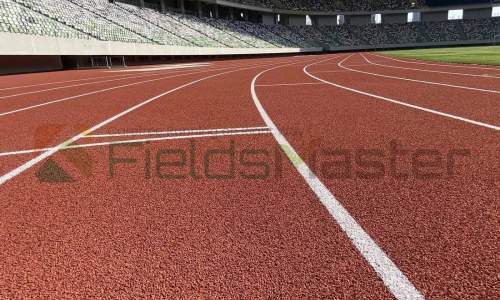
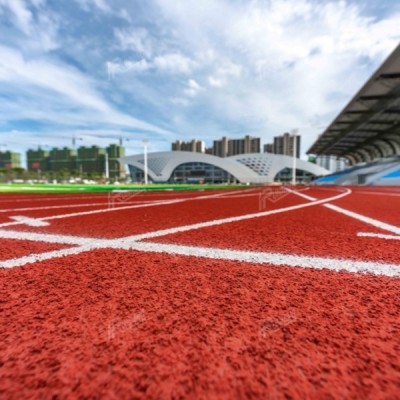
- Athletic Tracks: Professional running tracks require a precise balance of energy return, shock absorption, and surface uniformity. EPDM is a key component in IAAF-certified track systems, providing the durability to withstand cleated footwear and the resilience for optimal athletic performance. Its all-weather capabilities ensure the track remains usable and safe in various conditions.
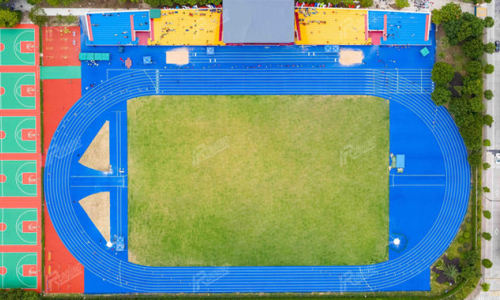
- Multi-Use Game Areas (MUGAs): For sports like tennis, basketball, and volleyball, EPDM surfaces offer excellent traction and consistent ball bounce. The ability to embed permanent, multi-colored lines for different sports makes it an incredibly efficient and durable solution for multi-purpose courts in schools and communities.
- Wet Pour Systems and Water Parks: The term "wet pour" refers to the installation method where rubber granules are mixed with a polyurethane binder and poured on-site. EPDM is ideal for these systems, especially in and around water. It is non-slip even when wet and resistant to chlorine and other pool chemicals. This makes it the premier choice for pool decks, splash pads, and water park surfacing, where safety and durability are paramount.
In these advanced applications, SBR is simply not a viable option for the top surface due to its lack of UV resistance and limited color options. EPDM's versatility and high-performance characteristics solidify its status as the superior material for demanding surfacing projects.
Making the Optimal Practical Choice: Key Considerations for EPDM vs SBR in Your Project Selection
Ultimately, the decision between EPDM and SBR granules comes down to a practical analysis of your project's specific needs. This involves looking beyond the surface-level differences to balance upfront costs with long-term performance, and understanding that proper installation is just as crucial as the material itself. Armed with the right information, you can make a choice that delivers both immediate value and lasting quality.
Balancing Initial Project Cost Against Significant Long-Term Value in Your Rubber Granules Comparison Analysis
The most immediate and often decisive factor in any project is the budget. On this front, SBR has a clear advantage in terms of initial material cost. Being made from recycled tires, black SBR granules are significantly cheaper than virgin EPDM granules. For projects with very tight budgets where only basic impact absorption is needed and aesthetics are not a concern (e.g., an indoor training facility's subfloor or a protected base layer), SBR can be a perfectly logical choice.
However, a professional cost analysis must extend to the full lifecycle of the surface. This is where the argument for EPDM's long-term value becomes powerful.
- Total Cost of Ownership (TCO): An EPDM surface, with a lifespan of 10-20 years, can last two to four times longer than an exposed SBR surface. While its initial cost might be higher, it eliminates the need for one or more full replacement cycles. When factoring in the cost of labor, demolition, and disposal for those future replacements, EPDM often emerges as the more economical choice over the long term.
- Maintenance & Repair Costs: Exposed SBR surfaces will require more intensive maintenance as they age, including patching cracks and addressing hardening issues. EPDM's durability translates to lower annual maintenance costs.
- Aesthetic Value and Usage: For commercial facilities, parks, and schools, an attractive, colorful, and inviting surface has inherent value. A faded and cracked SBR playground is less appealing and may see reduced use, diminishing the value of the investment. A vibrant EPDM surface retains its appeal, maximizing its utility and community value for years.
The key takeaway is to shift the conversation from "initial cost" to "long-term investment." While SBR saves money on day one, EPDM protects the investment for years to come.
Effective Installation Strategies: Ensuring Quality, Reducing Rework, and Optimizing Performance for Both Granule Types
Even the highest-quality materials will fail if installed incorrectly. A successful, long-lasting rubber surface is a product of both the granules and the installation process. Whether using EPDM or SBR, several universal principles must be followed to ensure quality and optimize performance.
1. Sub-base Preparation: The installation is only as good as the foundation it sits on. The sub-base—whether it's compacted aggregate, asphalt, or concrete—must be stable, level, and properly drained. Any movement or failure in the sub-base will telegraph through to the rubber surface, causing cracks or undulations. Freshly poured concrete should be allowed to cure for at least 28 days before rubber surfacing is applied, as off-gassing can interfere with binder adhesion.
2. The Right Binder: The rubber granules are held together by a polyurethane (PU) binder. There are two main types: * Aromatic Binder: More cost-effective but will yellow or "amber" when exposed to UV light. It is suitable for use with black SBR base layers where discoloration is not visible. * Aliphatic Binder: More expensive but is UV-stable and will not yellow. It is essential for use with EPDM top layers to ensure the colors remain true and vibrant. Using an aromatic binder with EPDM is a common cost-cutting mistake that leads to a discolored, yellow-tinged surface.
3. Proper Mixing and Application: The ratio of binder to rubber granules is a critical, manufacturer-specified formula. Too little binder results in a weak surface where granules can easily come loose ("raveling"). Too much binder can create a hard, slick surface. The materials must be thoroughly mixed and then poured and troweled to a consistent, specified thickness by skilled technicians. Installers use trowels and lubricating agents to create a smooth, seamless finish.
4. Environmental Conditions: Installation should occur within a specific temperature and humidity range, typically between 10°C and 28°C (50°F and 82°F) in dry conditions. Installing in weather that is too hot, too cold, or wet can compromise the curing process of the binder, leading to a failed surface.
Following these strategies is non-negotiable for a successful outcome. For those interested in the specifics of what we offer, an overview of available materials can be found on our product page, which provides detailed specifications.
Key Takeaways: EPDM vs. SBR at a Glance
Navigating the choice between EPDM and SBR rubber granules can be distilled down to a few core principles that balance budget, performance, and long-term goals. This section provides a concise summary to reinforce the most critical decision-making factors for your project.
Primary Application Dictates Choice: The most fundamental takeaway is that SBR and EPDM excel in different roles. SBR's cost-effectiveness and excellent shock absorption make it the industry standard for base layers in poured-in-place systems, where it is protected from UV exposure. EPDM, with its superior UV resistance, color stability, and durability, is the unequivocal choice for the top wear layer in any outdoor application where aesthetics and longevity are important. A hybrid system using an SBR base and an EPDM top often provides the best balance of cost and performance.
Color and Aesthetics Are Functional: In the context of playgrounds and recreational spaces, color is not just decoration—it's a functional element that enhances engagement, enables game design, and contributes to the overall value of the space. EPDM offers virtually limitless design freedom with a vast palette of vibrant, long-lasting colors. SBR is functionally black, and any attempts to color it are superficial and temporary. If your project's success depends on a specific visual theme or lasting aesthetic appeal, EPDM is the only viable option.
Long-Term Value Trumps Initial Cost: While SBR offers significant upfront savings, a true cost analysis must consider the total cost of ownership. An exposed SBR surface may need replacement in as little as 3-5 years, whereas an EPDM surface can last 10-20 years. The cost of repeated labor, removal, and reinstallation often makes SBR a more expensive proposition over the project's intended lifespan. EPDM represents a higher initial investment that pays dividends in longevity, reduced maintenance, and sustained performance, delivering a stronger long-term ROI.
Safety is a Long-Term Commitment: Both materials can be installed to meet critical fall height (CFH) safety standards on day one. The crucial difference is how they maintain that safety over time. EPDM's chemical stability ensures it retains its elasticity and shock-absorbing properties for many years. SBR, when exposed to the elements, can harden and become brittle, potentially compromising its ability to cushion falls and falling out of safety compliance long before it is replaced. Opting for EPDM as a top layer is an investment in more reliable, long-term safety.
Installation Quality is Paramount: The performance of either material is entirely dependent on the quality of the installation. A well-prepared sub-base, the correct type and ratio of binder (Aliphatic for EPDM), and skilled application are non-negotiable for a durable, successful surface. Investing in a reputable, experienced installer is just as important as selecting the right granules.
Frequently Asked Questions (FAQ)
1. Is SBR rubber from recycled tires safe for playgrounds?
Yes, SBR rubber sourced from recycled tires is widely considered safe for use in playground surfacing, particularly when used as the base layer. The materials undergo processing to remove steel, fiber, and other contaminants. Concerns have occasionally been raised about chemicals, but numerous studies have not found significant health risks associated with the typical exposure on a playground. When used as a base layer and capped with a stable EPDM top layer, any potential for direct contact or off-gassing is further minimized, making the combined system robustly safe.
2. How long does an EPDM playground surface actually last?
With professional installation and regular, basic maintenance, an EPDM playground surface can realistically last between 10 and 20 years. Some sources even suggest a lifespan approaching 25 years in ideal conditions. Key factors influencing longevity include the quality of the EPDM granules and binder, the thickness of the installation, the intensity of UV exposure in the local climate, the volume of foot traffic, and the diligence of maintenance. For instance, a surface in a high-UV environment like Arizona may have a shorter lifespan than one in a temperate climate like the UK.
3. Can you mix EPDM and SBR granules in the top layer to save money?
While it is technically possible to create a "blend" of EPDM and SBR for the top layer, it is generally not recommended for high-quality, long-lasting applications. The primary issue is that the SBR granules in the mix will still degrade under UV light at a much faster rate than the EPDM. This can lead to an uneven appearance over time, as the black SBR particles break down and "bleed," potentially staining the surrounding EPDM granules and creating a "muddy" or dirty look. The surface may also wear unevenly. For a clean, vibrant, and durable finish, a 100% EPDM top layer is the industry best practice.
4. What is the required maintenance for EPDM vs. SBR surfaces?
Maintenance for both surfaces starts with regular cleaning to keep them free of debris like leaves, sand, and dirt, which can clog the porous surface and impede drainage. This can be done with a leaf blower or a broom.
- EPDM Maintenance: EPDM is very low-maintenance. Periodic cleaning with a low-pressure water hose or a pH-neutral cleaner is typically all that is needed to keep it looking vibrant. It's crucial to avoid harsh chemical cleaners, solvents, or high-pressure power washing, which can damage the binder and dislodge granules. In winter, urea-based products are recommended for de-icing instead of rock salt, which can be abrasive.
- SBR Maintenance: An exposed SBR surface requires similar cleaning but may need more frequent inspection for signs of hardening, cracking, or granule loss due to its faster degradation rate.
5. Why does SBR rubber sometimes have a strong odor?
The distinct "rubber" smell associated with SBR comes from its origin as vehicle tires. The odor is caused by the volatile organic compounds (VOCs) that are part of the rubber and its manufacturing process. This smell is usually strongest when the material is new and installed in an enclosed, poorly ventilated indoor area. For outdoor installations, the odor typically dissipates significantly over a few weeks to months as the material is exposed to open air and weather. When SBR is used as a base layer and capped with EPDM, the odor is sealed in and is generally not noticeable.
In summary, while SBR rubber granules offer a robust and cost-effective solution, especially for base layers or infill, the overall EPDM vs SBR rubber granules comparison strongly highlights significant EPDM advantages, particularly for the visual appeal, long-term durability, and safety of top surfaces.
From my professional experience, if you're prioritizing sustained aesthetic quality, superior resistance to environmental factors, and critically, minimizing future maintenance and potential rework, the investment in EPDM is consistently a wise decision. It’s about creating safe, attractive, and truly sustainable environments.
Ultimately, your final material choice should carefully balance your project's specific budget, aesthetic aspirations, and required lifespan. I trust this guide has equipped you to confidently navigate your options and select the ideal rubber granules for your next endeavor.