

EPDM Granules Distribution Explained: Understanding the Prosperous Rubber Granules Business Landscape.
As an industry veteran, I've witnessed the remarkable expansion and rising significance of the rubber granules business firsthand. I am convinced that a thorough understanding of EPDM granules distribution is the linchpin to unlocking the vast potential still latent within this dynamic market. Allow me to walk you through the exciting EPDM market opportunity, a venture that is not only profitable but also carries profound environmental importance. In this comprehensive guide, we will explore the transformation of waste into value, the diverse applications of these materials, and the strategic pathways to building a successful enterprise in this prosperous landscape.
Key Takeaways
- Market Growth & Opportunity: The global EPDM market is on a significant upward trajectory, projected to reach USD 5.8 billion by 2026. This growth is fueled by increasing demand from the automotive and construction sectors, creating a substantial opportunity for businesses involved in EPDM granules distribution. The recycled rubber market, a core component of this business, is also expanding, with forecasts predicting a value of USD 6.1 billion by 2026, demonstrating a strong and sustained demand for sustainable materials.
- Sustainability as a Core Driver: The rubber granules business is fundamentally linked to the circular economy. It transforms end-of-life tires, a major environmental challenge, into valuable resources for playgrounds, sports surfaces, and other applications. Each ton of recycled rubber saves approximately 1 ton of CO2 emissions, making this a business with a positive environmental footprint.
- The Importance of Quality and Safety: The granulation process, whether through ambient or cryogenic methods, is crucial for producing high-quality granules. For applications like playgrounds and sports fields, safety is paramount. Adherence to standards like ASTM F1292 for Head Injury Criterion (HIC) is non-negotiable. HIC-certified products ensure surfaces can adequately absorb impact, significantly reducing the risk of serious head injuries and providing peace of mind for clients and end-users.
- Strategic Material Selection: The choice between SBR (Styrene-Butadiene Rubber) and EPDM (Ethylene Propylene Diene Monomer) granules is a key strategic decision. SBR, derived from recycled tires, is a cost-effective and durable base layer. EPDM, a virgin synthetic rubber, offers superior UV stability, a vast color palette, and exceptional durability, making it the premium choice for top layers and aesthetically demanding projects. Understanding how to combine these materials allows for both performance and budget optimization.
- Effective Distribution and Sourcing: Success in the rubber granules business hinges on a robust distribution network. This involves building relationships with tire recyclers, granulation facilities, and logistics partners. For business owners, strategic sourcing means vetting suppliers for consistent quality, reliable supply chains, and proper compliance certifications. This ensures that the final product delivered to the customer meets all performance and safety specifications.
The Core of the Rubber Granules Business: Transforming Waste and Spotting EPDM Market Opportunity
The rubber granules business is a fascinating intersection of recycling, industrial manufacturing, and market-driven innovation. At its heart, it's about transformation—turning a problematic waste stream into a cornerstone material for countless applications. Understanding this foundational process is the first step toward recognizing the immense EPDM market opportunity and building a successful enterprise. It’s a journey I've been on for years, and it begins with a commitment to sustainability and a deep appreciation for the value hidden within discarded materials. You can learn more about our mission and values on our about page.
From Waste Tyres to Valuable Resource: My Perspective on Why Recycling Matters
Every year, the world generates over a billion end-of-life tires, creating a significant environmental challenge. Illegally dumped or landfilled tires pose fire risks and become breeding grounds for pests. As an industry professional, I see this not as a waste problem but as a resource opportunity. Tire recycling is the bedrock of the rubber granules business and a powerful example of the circular economy in action.
By reclaiming and processing these tires, we divert millions of tons of waste from landfills. This process conserves natural resources by reducing the need for virgin materials and saves a considerable amount of energy. For instance, producing one ton of recycled rubber requires significantly less energy than producing the same amount of new rubber. Industry reports suggest that recycling four tires reduces CO2 emissions by about 323 pounds, which is equivalent to the carbon absorption of a mature tree over a year. The global push for sustainability and stricter environmental regulations will only amplify the importance of this practice, making the recycled rubber market an increasingly vital and profitable sector. The global recycled rubber market size was valued at USD 4.6 billion in 2023 and is projected to grow, showcasing this trend.
The Granulation Process: How We Create Quality Rubber Granules Essential for Distribution
The transformation from a whole tire to uniform, high-quality granules is a sophisticated mechanical process. The quality of the final product, which is paramount for successful distribution, depends entirely on the precision and control exercised during this stage. There are two primary methods used in the industry:
Ambient Grinding: This is the most common method. Tires are shredded at room temperature into progressively smaller chips. The process involves powerful shredders and granulators that tear and cut the rubber. Magnets are used to separate steel wiring, and fiber separation systems remove nylon or polyester fluff. The result is irregularly shaped granules with a larger surface area, which can be advantageous for bonding with binders.
Cryogenic Grinding: In this high-tech process, shredded tire chips are flash-frozen using liquid nitrogen to a temperature below -80°C. At this temperature, the rubber becomes brittle, like glass. It is then shattered into fine, smooth particles by an impact mill. This method is excellent for removing steel and fiber, resulting in a very clean, uniform, and fine granule.
The choice of method impacts the characteristics and cost of the final granules. Both processes are integral to supplying the market with the essential materials needed for everything from playground surfaces to athletic tracks.
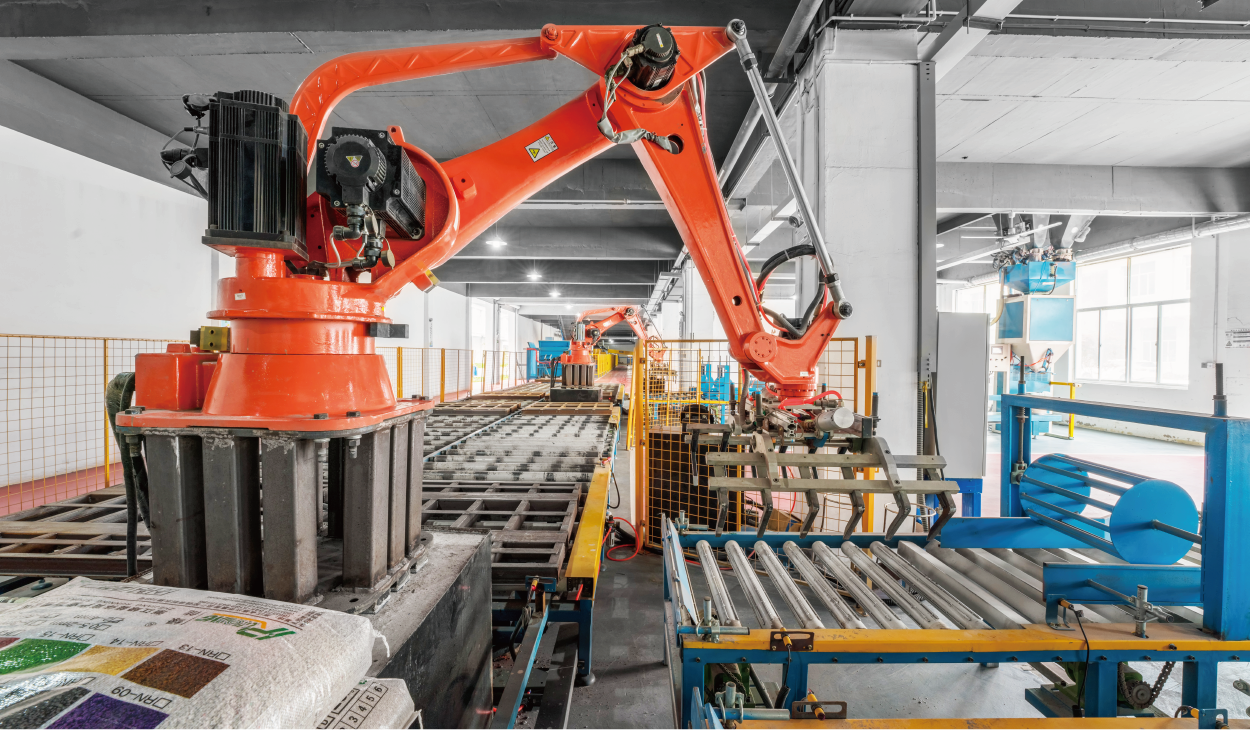 The granulation process transforms end-of-life tires into valuable, uniform rubber granules.
Key Ingredients: What Fuels the Rubber Granules Business, Including EPDM Rubber
While recycled tires form the foundation, the rubber granules business relies on a few key materials to meet diverse market demands. The primary distinction is between SBR and EPDM granules.
SBR (Styrene-Butadiene Rubber): This is the black rubber derived directly from recycled tires. It is highly durable, elastic, and cost-effective. Due to these properties, SBR granules are the standard choice for base layers in surfacing projects, providing shock absorption and stability. Its only drawback is that its natural black color can absorb heat, and any colored versions are merely coated, with the color eventually wearing off.
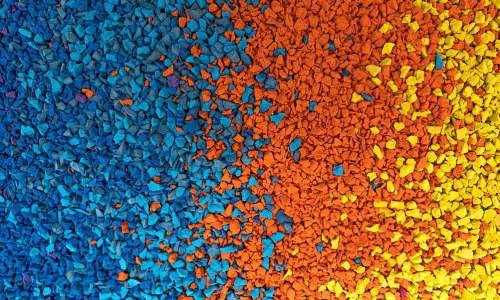
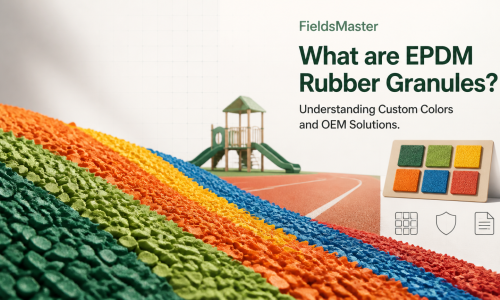
EPDM (Ethylene Propylene Diene Monomer): Unlike SBR, EPDM is a type of synthetic, virgin rubber. It is manufactured specifically for high-performance applications. The key advantages of EPDM are its exceptional durability, resistance to UV radiation, and availability in a vast spectrum of bright, permanent colors. This makes EPDM the premium choice for the top, visible layer of playground surfaces, running tracks, and architectural designs where aesthetics and long-term color stability are crucial. The global EPDM market is projected to continue its strong growth, reflecting its increasing adoption in high-value applications.
The business thrives on the strategic use of these materials—using cost-effective SBR for the functional base and vibrant, durable EPDM for the visible, high-contact surface.
Exploring the Applications Where EPDM Granules Distribution Creates an Impact and Expands the EPDM Market Opportunity
The true measure of the rubber granules business is seen in its vast and growing range of applications. Distribution isn't just about moving product; it's about enabling safer playgrounds, building world-class athletic facilities, and contributing to innovative architectural designs. The versatility of EPDM and SBR granules is what drives the market forward, turning a simple material into a solution for many modern challenges. Witnessing these materials in action, which you can see in our case studies, is a constant reminder of the industry's positive impact.
Diverse Uses: Where Rubber Granules Shine in Everyday Life
Once you start looking, you'll see rubber granules everywhere. Their unique properties of durability, elasticity, and shock absorption make them ideal for a multitude of uses that directly impact our daily lives.
Here is a breakdown of some of the most common applications:
| Application | Material Used | Key Benefits |
|---|---|---|
| Playground Surfaces | EPDM (Top Layer), SBR (Base) | Safety (impact absorption), vibrant colors, durability, accessibility (ADA) |
| Running Tracks | EPDM & Polyurethane Binder | Performance elasticity, weather resistance, spike resistance, long lifespan |
| Sports Fields | SBR or EPDM Infill | Player safety, consistent ball bounce, high durability, improved drainage |
| Landscaping / Mulch | Colored SBR or EPDM | Low maintenance, pest-resistant, doesn't decompose, color stability |
| Molded Products | EPDM / SBR | Anti-fatigue mats, paving stones, flooring tiles, industrial components |
| Construction | SBR | Soundproofing, vibration damping, lightweight concrete aggregate |
The construction industry, in particular, is a significant driver of demand. As of 2024, the application of EPDM in roofing and other construction-related uses continues to grow, underscoring the material's versatility beyond traditional surfacing. The global market trends project that the demand from the building and construction sector will be a primary factor in the market's expansion toward 2026 and beyond.
Prioritizing Safety: The Importance of Certified Surfaces in EPDM Granules Distribution
When we talk about applications like playgrounds, safety is not just a feature—it's a moral and legal obligation. Selling and distributing EPDM or SBR granules for these environments carries a significant responsibility. The primary safety concern is the risk of head injuries from falls. A surface that looks soft can be dangerously hard upon impact if not engineered correctly.
This is where industry standards become critical. In the United States, the primary standard for playground surfacing is ASTM F1292, which specifies the test method for determining the "Head Injury Criterion" (HIC). A HIC score measures the impact severity and the likelihood of a life-threatening head injury. A surface must test below a certain HIC threshold from a specific fall height to be considered compliant and safe.
As a distributor or installer, ensuring your materials and final installations meet these certifications is non-negotiable. It protects children, limits liability for your clients (schools, municipalities), and builds a reputation for trustworthiness and quality—the cornerstones of a sustainable business.
My Insights on HIC Certified Products: Ensuring Peace of Mind in Playground Spaces
In my experience, focusing on HIC certification is one of the most important things you can do in this business. A HIC-certified product isn't just a material; it's a safety system. The certification process involves rigorous testing where a headform instrument is dropped from various heights onto the surface, and the impact forces are measured.
Here's why it matters from a business perspective:
- Reduces Liability: Providing certified products demonstrates due diligence and adherence to established safety norms, which is crucial in the event of an accident.
- Market Differentiator: Not all suppliers prioritize or can achieve certification. Promoting your products as HIC-certified positions you as a premium, safety-conscious supplier.
- Opens Doors to Projects: Many public projects (schools, city parks, government facilities) mandate HIC compliance in their tender documents. Without certified products, you are excluded from these lucrative opportunities.
I always advise clients to ask for the HIC test data for the specific fall height required for their project's play equipment. It’s about more than just selling granules; it's about delivering a complete safety solution that provides lasting peace of mind for everyone.
 HIC-certified EPDM surfaces provide a safe, durable, and aesthetically pleasing environment for children's play areas.
Building Success: Navigating EPDM Granules Distribution and Maximizing Your Rubber Granules Business
Success in the rubber granules business extends beyond understanding the material and its applications. It requires strategic decision-making, from material selection and sourcing to navigating the complexities of quality control and market demands. For an entrepreneur or a business owner, this is where operational excellence and market insight converge to create a competitive edge. It's about building a robust supply chain and a brand that clients trust for quality, compliance, and reliability. This is the part of the journey where you turn the potential of the EPDM market opportunity into tangible, long-term success.
Choosing Wisely: SBR and EPDM Granules for Stability and Aesthetic Appeal
The most common and critical decision in any surfacing project is the choice and combination of SBR and EPDM granules. I've guided countless clients through this process, and the optimal solution almost always involves a dual-layer approach.
The SBR Base Layer (The "Shock Pad"): The foundation of any high-quality safety surface is the "shock pad," which is typically made from larger SBR granules mixed with a polyurethane binder. This layer is responsible for the bulk of the impact absorption and meeting the required HIC safety rating. Because it's made from recycled tire rubber, it is incredibly cost-effective, allowing you to build up the necessary thickness for fall height protection without an exorbitant cost.
The EPDM Wear Layer (The "Aesthetic Topcoat"): This is the top 10-15mm layer that everyone sees and interacts with. Using premium EPDM granules here is essential for several reasons:
- UV Stability: EPDM is specifically engineered to resist fading and degradation from sunlight, ensuring the vibrant colors last for years. SBR, if exposed, will become brittle and its color coating will wear off.
- Aesthetics: EPDM is available in dozens of bright, consistent colors. This allows for intricate designs, school logos, and themed play areas that are simply not possible with coated SBR.
- Durability: As a virgin material, EPDM offers superior tensile strength and wear resistance, standing up to years of heavy foot traffic.
By recommending this layered system, you provide a solution that is both safe and beautiful, optimizing the client's budget while delivering a high-performance, long-lasting surface. To see the different granules and color options available, I invite you to explore our product page.
Strategic Sourcing: My Advice on Effective EPDM Granules Distribution Channels
Your business is only as strong as your supply chain. For a distributor, "sourcing" is your core activity. You must establish reliable, efficient, and cost-effective channels to procure and deliver granules.
Here are the key nodes in the distribution channel:
- Raw Material Suppliers: These are the tire recycling centers that provide the initial shredded tire material or SBR granules. Building strong relationships here ensures a consistent supply of the base material.
- Granulation Facilities: These are the plants that perform the ambient or cryogenic grinding. You might source directly from them, or they may be part of a vertically integrated supplier. Assess their technology, quality control processes, and capacity.
- EPDM Manufacturers: EPDM granules are produced by chemical companies. You will likely be sourcing these from large-scale national or international manufacturers or master distributors who hold regional stock. A market report from 2026 identified major players like Dow Chemical and ExxonMobil as key producers, whose output influences global supply and pricing.
- Logistics and Warehousing: The physical movement of these bulky materials is a major cost. Effective logistics partners and strategically located warehouses are crucial for managing inventory and ensuring timely delivery to job sites.
- Direct to Installers/Contractors: This is the final leg. Your primary customers are the surfacing contractors and construction companies who purchase the granules for their projects.
My advice is to diversify your sourcing where possible to avoid dependency on a single supplier, but also to build deep partnerships with a few key players whose quality and reliability you can trust implicitly. Vet their certifications, ask for product data sheets, and always get samples to verify quality before committing to large orders.
Seizing the EPDM Market Opportunity: What I Look for in Quality and Compliance
To truly capitalize on the thriving EPDM market opportunity, you must position yourself as a purveyor of quality. The market is growing, but so is customer awareness. Clients are becoming more sophisticated and are looking for partners, not just suppliers.
Here’s my personal checklist for vetting quality and compliance:
- Material Purity: The granules should be 99.9% free of steel, fiber, and other contaminants. Any foreign material can compromise the integrity and safety of the final surface.
- Consistent Granule Size (Gradation): The granules should be of a uniform size as specified. Inconsistent sizing can lead to problems with binder mixing and surface porosity. A good supplier will provide a sieve analysis report.
- Color Consistency: For EPDM, the color should be uniform across different batches. Nothing is worse than having a patched-up look on a finished surface because of color variations. Ask the supplier about their color matching process.
- Binder Compatibility: The granules must be dry and clean to ensure proper adhesion with polyurethane binders. Oily residues from the recycling process can lead to catastrophic adhesion failure.
- Documentation and Certification: Always demand the paperwork. This includes:
- Product Data Sheets (PDS): Outlining technical properties like density, hardness, and tensile strength.
- Safety Data Sheets (SDS): Essential for health and safety compliance.
- Certificates of Analysis (COA): Verifying the quality of a specific batch.
- HIC and ASTM Test Reports: The ultimate proof of safety compliance for playground applications.
By making these criteria your standard operating procedure, you build a business that is resilient, reputable, and perfectly positioned to seize the significant opportunities within the EPDM granules landscape.
Frequently Asked Questions (FAQ)
Q1: What is the projected growth for the EPDM granules market in 2026? A1: The global EPDM (Ethylene Propylene Diene Monomer) market is experiencing robust growth. Projections indicate that the market value will reach approximately USD 5.8 billion by 2026. This expansion is largely driven by increasing demand from the construction industry for applications like roofing, weather-stripping, and surfacing, as well as continued use in the automotive sector. For investors and business owners, this points to a stable and growing demand for high-quality EPDM granules.
Q2: Is investing in a rubber granules business profitable in 2026? A2: Yes, the business remains a highly attractive investment. The profitability is supported by several factors. Firstly, the raw material for SBR granules (end-of-life tires) is low-cost and abundant, providing a stable cost base. Secondly, rising landfill tipping fees and government incentives for recycling improve the economics of tire processing. Thirdly, the demand for rubber surfacing products is growing due to heightened safety awareness, sustainability mandates, and a booming construction sector. The overall recycled rubber market is projected to be worth USD 6.1 billion by 2026, underlining the sector's financial viability.
Q3: What are the main differences between SBR and EPDM granules? A3: SBR (Styrene-Butadiene Rubber) is derived from recycled car and truck tires. It is black, highly durable, and very cost-effective, making it the ideal material for the shock-absorbing base layer of a safety surface. EPDM is a virgin synthetic rubber created specifically for high-performance applications. Its primary advantages are superior UV resistance (it doesn't fade) and its availability in a wide array of bright, permanent colors. EPDM is used for the top decorative and wear layer of a surface. A typical high-quality installation uses a thick SBR base for safety and a thin EPDM top for aesthetics and longevity.
Q4: What does "HIC certified" mean and why is it important? A4: HIC stands for Head Injury Criterion. It is a value that measures the likelihood of a head injury from an impact, based on standards like ASTM F1292 in the USA. A surface is "HIC certified" if it has been tested in a laboratory and proven to absorb enough energy to reduce impact forces to a level considered safe from a specific fall height. It is arguably the most important metric for playground safety surfaces. For a business, providing HIC-certified products is crucial for limiting liability, meeting project specifications (especially for public works), and demonstrating a commitment to safety.
Q5: What are the key environmental benefits of the rubber granules business? A5: The business is a cornerstone of the circular economy. Its primary environmental benefit is the diversion of billions of used tires from landfills annually. Beyond that, recycling tires into granules saves a massive amount of energy compared to producing virgin rubber. Industry estimates suggest that for every ton of tires recycled, approximately one ton of CO2 emissions is prevented. Using rubber mulch also prevents the harvesting of wood, and the products themselves have a long lifespan, reducing the need for frequent replacement and further consumption of resources. It’s a business model that directly addresses waste reduction and resource conservation.
Based on what I've shared, it's evident that the rubber granules business, particularly with its focus on EPDM, holds immense and expanding potential. The market is not just surviving; it is flourishing, driven by a dual commitment to environmental responsibility and superior performance. I strongly encourage you to consider the tangible environmental benefits and the powerful market demand as you explore or expand your engagement in EPDM granules distribution. By maintaining an unwavering focus on quality, safety compliance, and strategic sourcing, we can collectively and successfully capitalize on this thriving EPDM market opportunity and build a more sustainable future.